What happens in your body during 5 days of FMD, and why what comes after matters more
FMD is not a fast: for five days you eat from a ready-made menu while your body gradually shifts into a different mode. A calm, day-by-day look at what happens, what human and animal studies have shown, and why the real work starts on day six.
For a long time I lived with a feeling of "basically fine". Nothing really hurt, my blood tests were normal, my doctor was happy. And yet by evening I had no energy left, my head felt foggy, and every morning started with the thought "just one more hour of sleep".
I got so used to it that I stopped noticing. I assumed this was simply what adult life feels like: work, family, tiredness, coffee.
Then I started digging. First into nutrition, then into sleep, movement and recovery. Each of these added something of its own. And then FMD came into my life, and now I do it several times a year.
People often ask me what actually happens in the body during those five days. And why I keep saying that day six and the two weeks after it matter more to me than the five days themselves. 🌱
FMD: five days with food
FMD stands for Fasting Mimicking Diet. The word "fasting" puts a lot of people off, and it shouldn't: you won't be going hungry. For all five days you eat from a ready-made menu, three times a day, real food made from ordinary ingredients.
The menu is built to be low in calories, protein and sugar, with enough plant fats and fibre. Your body gets food, yet its internal signals respond almost as they would to fasting. Hence the name.
This is what my autumn 2026 menu looks like. It is entirely plant-based:
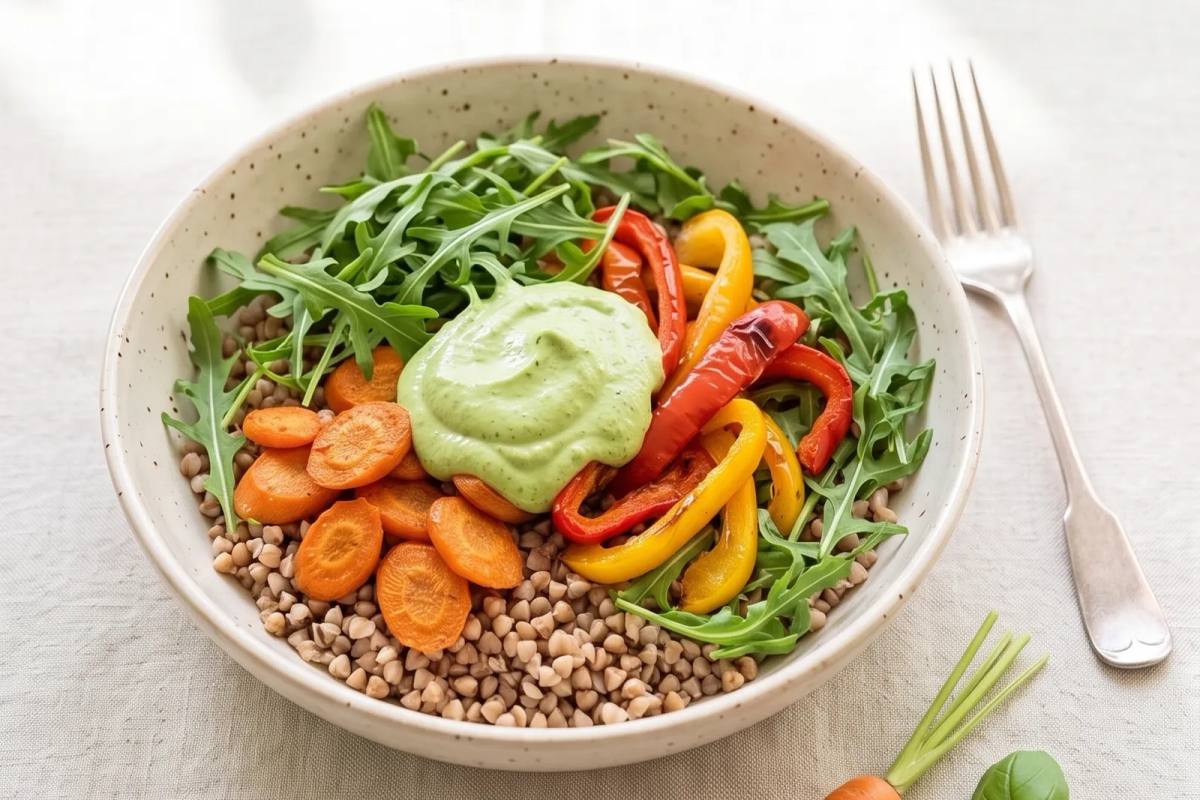
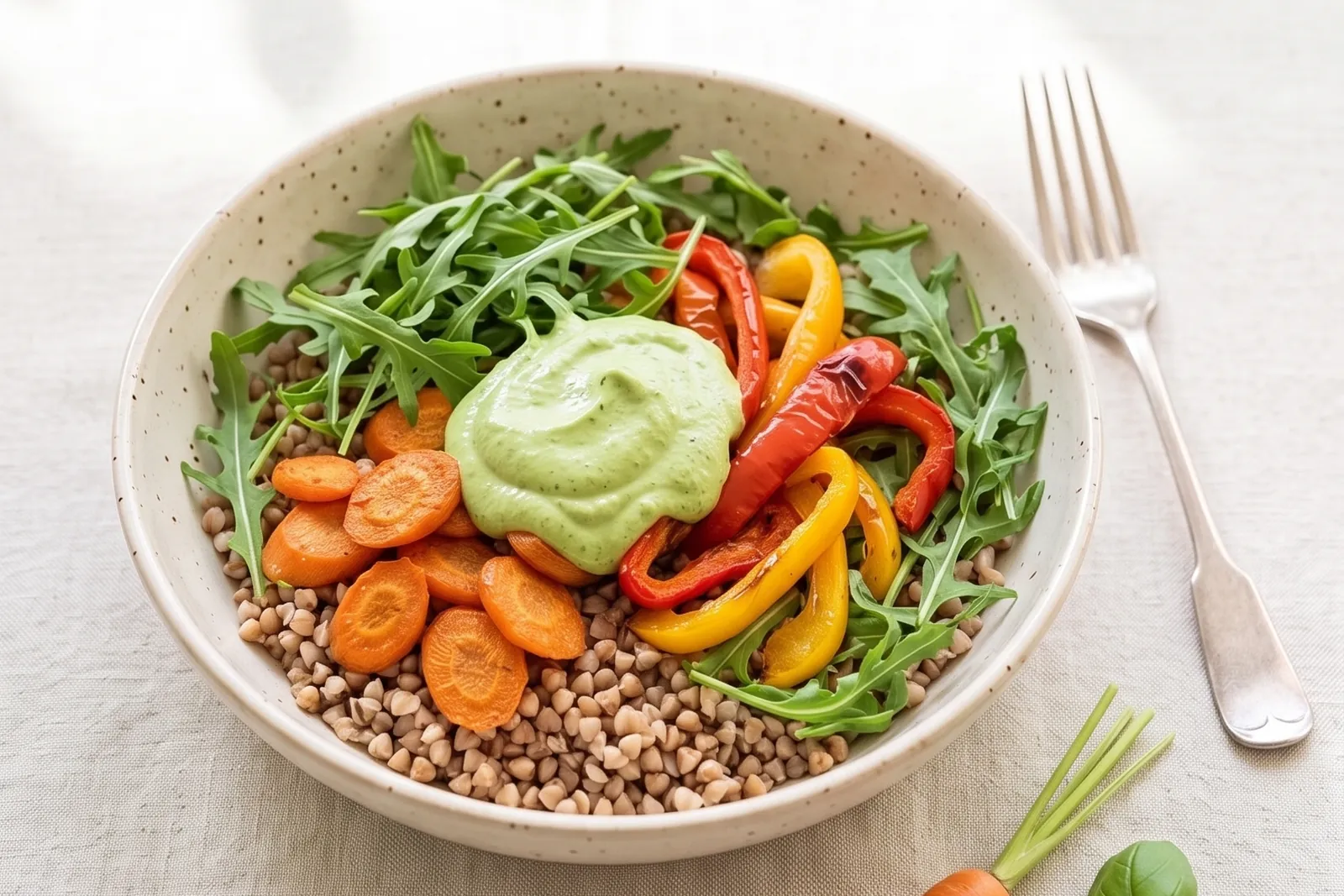
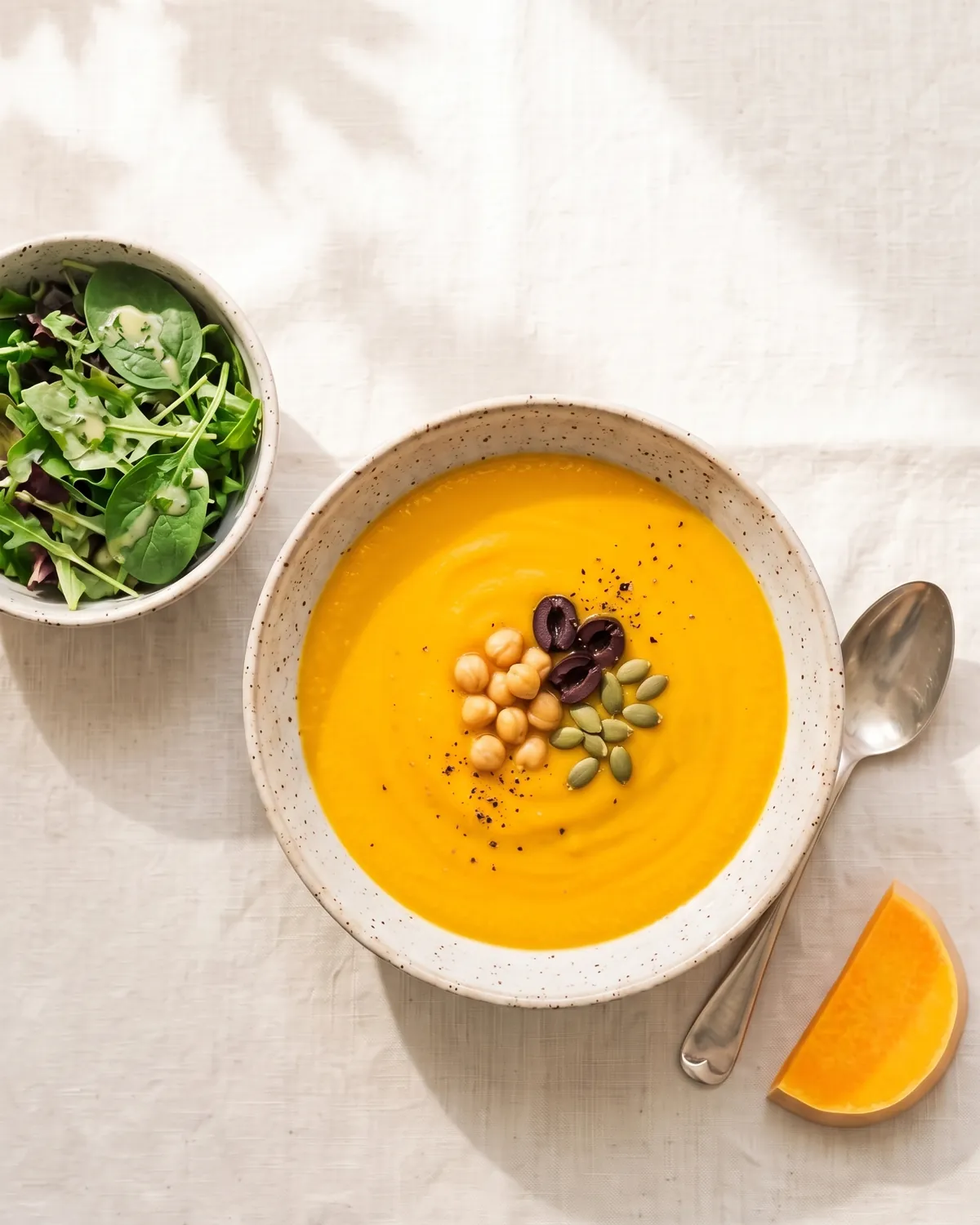
- Day 1, about 1,100 kcal. Creamy millet porridge with blueberries and flax, pumpkin soup with chickpeas and olives, an autumn buckwheat bowl with roasted carrots, sweet pepper and basil cream, and for dessert a baked pear with walnuts and cinnamon.
- Day 2, about 800 kcal. Oatmeal with slow-cooked apple and a Mediterranean bowl with buckwheat, courgette, cherry tomatoes, olives and basil cream.
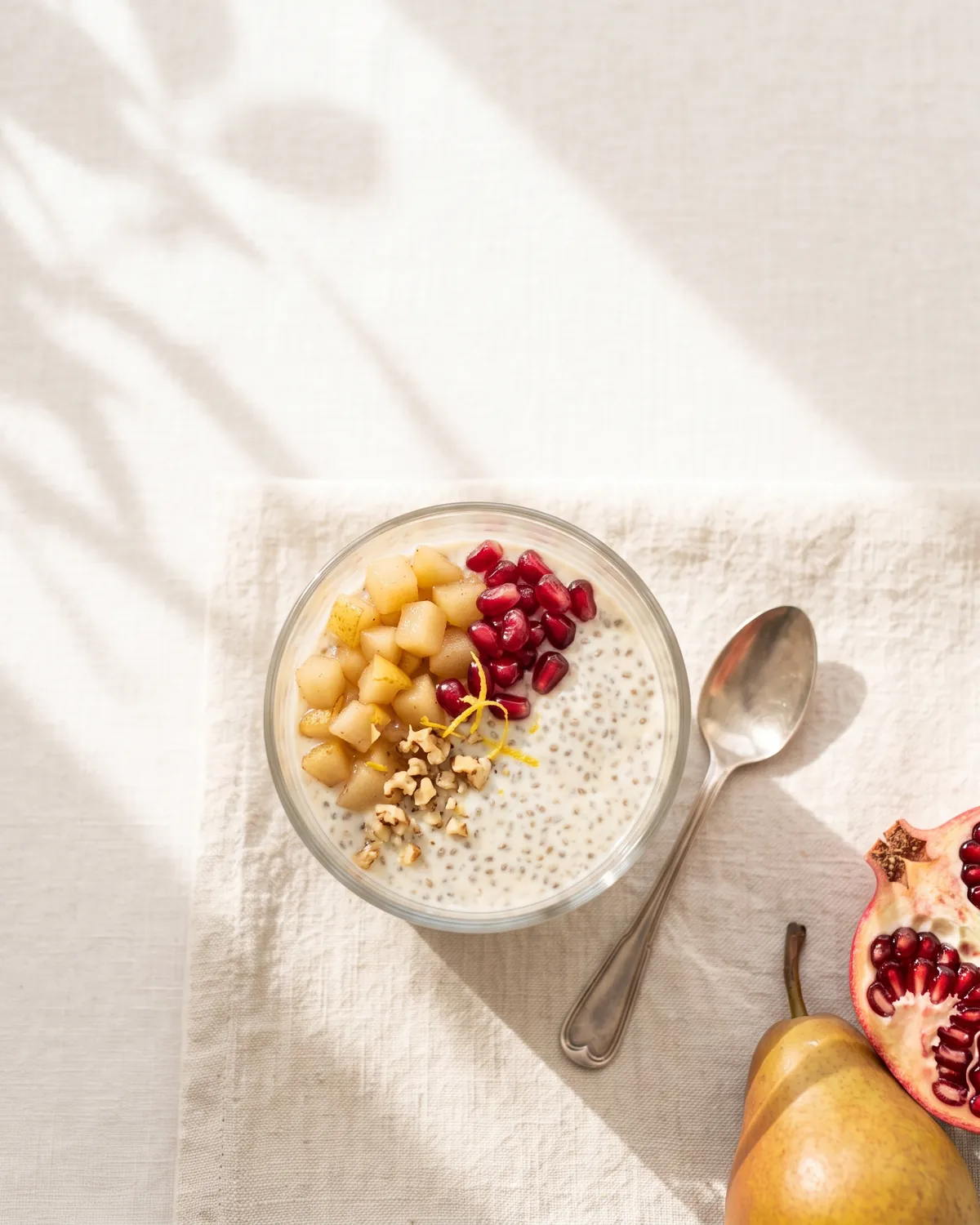
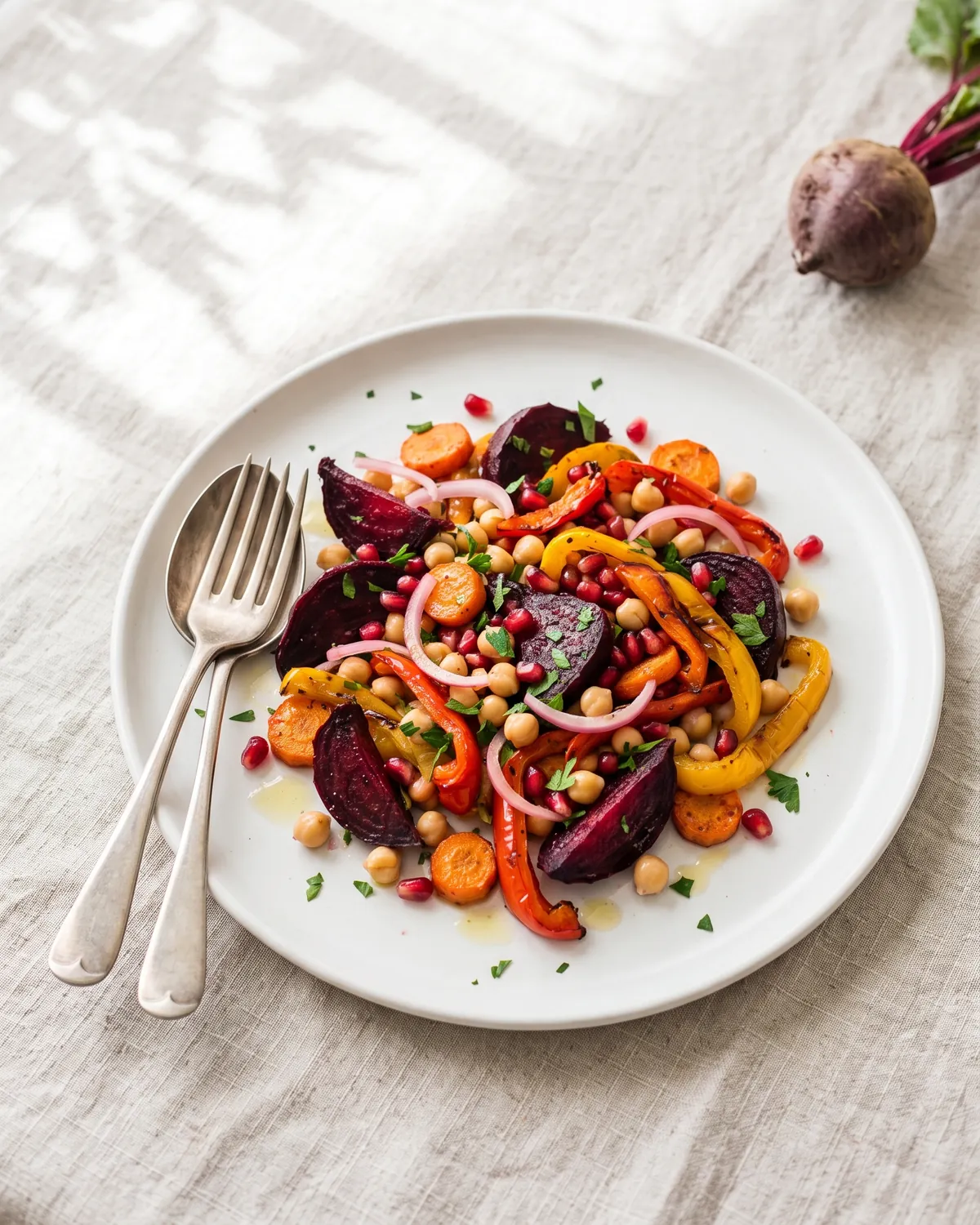
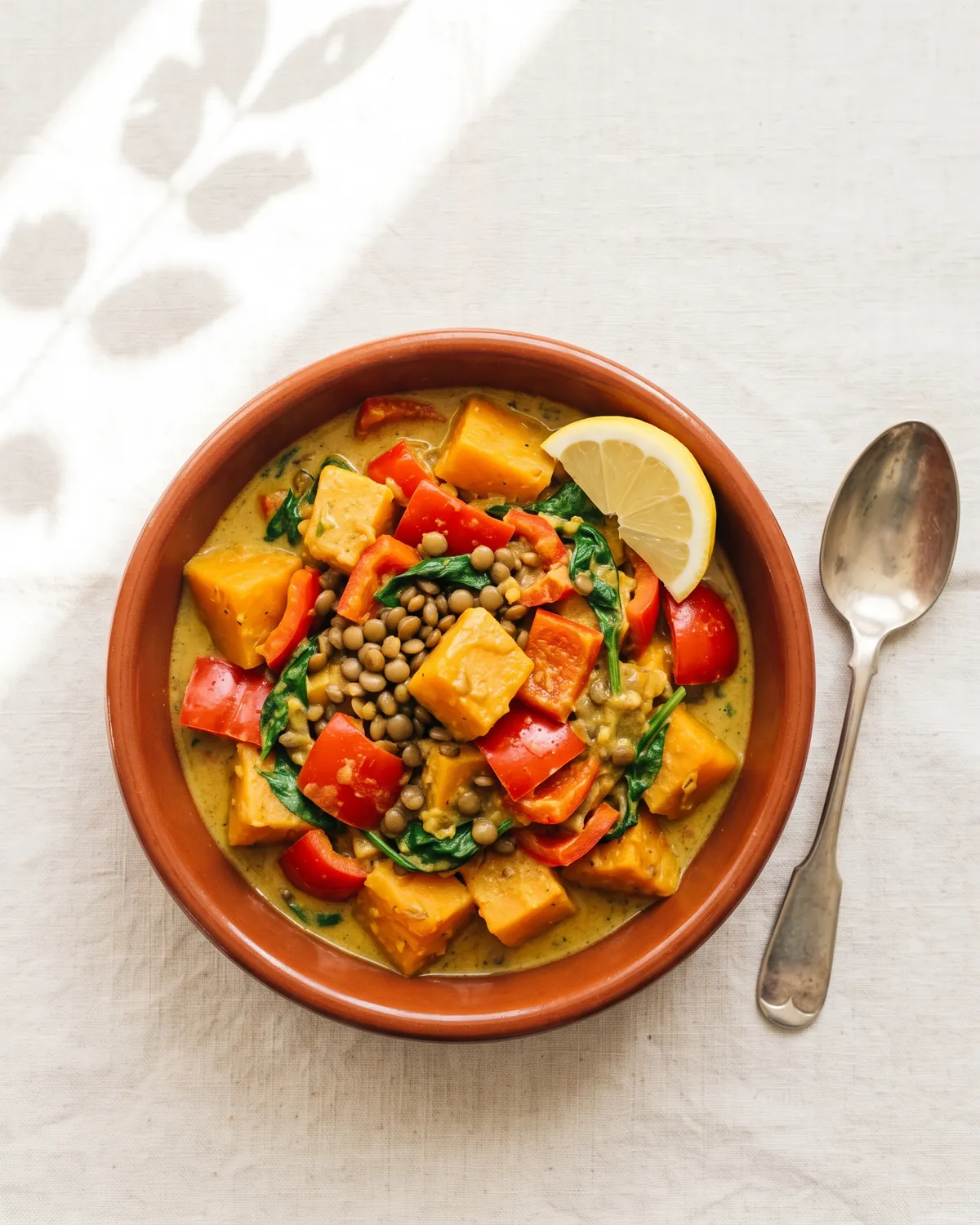
- Days 3 and 4, about 745 kcal. Autumn chia pudding with slow-cooked pear, pomegranate and walnut, a velvety cauliflower and courgette soup, a warm salad with roasted beetroot, carrot, sweet pepper, chickpeas and pomegranate, buckwheat with mushrooms and vegetables, and a vegetable curry with lentils.
- Day 5, about 725 kcal. A "Berry Lightness" smoothie and a warm "Southern" salad.
That step-down in calories is deliberate. In clinical studies of FMD, day 1 provided about 4,600 kJ (around 1,100 kcal) and days 2 to 5 about 3,000 kJ (around 720 kcal) per day, also from plant foods (Wei et al., 2017). My menu follows the same logic, only with food you cook yourself.

What happens, day by day
There is no switch in the body that flips exactly at midnight. Everyone moves through these processes at their own pace. But the overall picture looks like this.
🍽️ Days 1–2: the body uses up its glucose stores
In everyday life our main fuel is glucose. Some of it is always kept in reserve: the liver and muscles store glycogen, a kind of quick-access pantry.
On day one there is still a fair amount of food, about 1,100 kcal, and the body barely notices the difference. From day two the calories drop, and the body starts drawing more actively on the glycogen in the liver.
For many people these are the hardest days. You crave something sweet, you may get a headache, and you feel sluggish by evening. In a study of 100 participants, the most common complaints were exactly these: tiredness, weakness and headaches, all mild or moderate, with no serious side effects (Wei et al., 2017). If day two feels hard, that is a normal reaction to the change, and you are doing fine.
⚡ Days 3–5: more energy from fat
Once the glycogen pantry runs low, the body takes more and more of its energy from fat. The liver begins producing ketone bodies, a back-up fuel that both muscles and the brain can use.
Quite often it gets easier from day three: hunger quietens down and your head feels clearer.
At the same time, the body's internal growth signals change. Levels of IGF-1 (insulin-like growth factor 1) fall, and insulin works more calmly. Put very simply, these are signals that say "there's plenty of food, let's grow and build". When they quieten, the cell moves into a "protect and repair" mode.
Here it matters to separate what we know about people from what we so far know only from animals.
🔬 In humans. In the study by Wei and colleagues, blood was taken at the end of day five of the first cycle, before participants went back to normal eating. Compared with the start, the ketone body beta-hydroxybutyrate had risen, while IGF-1 and fasting glucose had fallen (Wei et al., 2017).
🧬 In animals and cells. Cellular "clean-up" (autophagy) and renewal have been studied best in experiments on mice and cells. In people they are very hard to measure directly, so I speak about them with caution.
🌱 Day 6: the interesting part starts with food
There is one detail from the animal research that I especially like. In work from Valter Longo's group, mice went through short FMD cycles. During a cycle, some of their organs and systems actually shrank slightly. Then, once they returned to normal feeding, their tissues showed more stem and progenitor cells, and regeneration followed (Brandhorst et al., 2015).
These are mouse data, and they cannot be transferred to humans one to one. But they show the logic well: restriction starts the process, and the rebuilding happens once you eat again. That is why how you come out of these five days, and what you eat afterwards, is far from a detail for me.
What the human studies showed
📊 The 2017 study (Wei et al., Science Translational Medicine). 100 generally healthy adults were split into two groups. One ate as usual for three months; the other did a five-day FMD once a month and otherwise also ate as usual. Blood and blood pressure were checked 5 to 7 days after the third cycle, once people had already returned to normal eating.
- In the FMD group, systolic blood pressure fell by an average of 4.5 mmHg and diastolic by 3.1.
- IGF-1 fell by an average of 21.7 ng/mL.
- The biggest changes were in people whose values were elevated at the start. In participants with IGF-1 above 225 ng/mL it fell by 55.1 ng/mL, nearly four times more than in the others. In those with fasting glucose above 99 mg/dL it dropped by an average of 11.8 mg/dL and came back into the normal range.
📊 The 2024 study (Brandhorst et al., Nature Communications). The researchers took a second, more detailed look at data from the same clinical trial and compared it with a second trial.
- After three FMD cycles, biological age, estimated from blood tests, fell by a median of almost 2.5 years in 52 participants, and by about 1.5 years on average. In the control group it did not change.
- In participants with prediabetes, the insulin resistance index HOMA-IR went from 1.47 to 1.21. There were 11 such participants. (I wrote in detail about what insulin resistance is, and why "normal blood sugar" doesn't guarantee anything, in this article.)
- On MRI, in five participants whose liver fat was above 5% at the start, the share of fat fell from about 14% to 8%.
- The ratio of lymphoid to myeloid blood cells increased. Researchers regard it as one indicator of immune system age.
These data have limits. The groups are small, especially the subgroups. We are talking about markers in blood tests, not about diseases or treating them. Both studies come from Valter Longo's group, and Longo himself is linked to a company that makes ready-made FMD kits; the authors state this openly. And most importantly: all these changes were measured after three monthly cycles, not after one.
Why what comes after matters more
Five days of FMD give your body a breather and a good push. Many people feel lighter, clearer, and rediscover a taste for simple food. But five days are still five days. If on day six everything goes back to how it was, a month later that lightness is just a pleasant memory.
For me, FMD became an entry point. Afterwards you can feel very clearly how food affects your body, and new habits take root more easily than in the usual rush.
🕊️ A gentle exit
Day six is the transition back to ordinary balanced eating. There is no need to keep restricting, and no need for a feast "to make up for" the five days either. In the morning, a gentle plant-based dish such as porridge or a puréed vegetable soup. At lunch, vegetables, grains and a small portion of protein. Eat slowly and stop when you feel comfortably full.
🍽️ 14 days of TheBetterPlate
After that I suggest two weeks of eating with my method, TheBetterPlate. It is built around a simple plate:
- ½ of the plate: vegetables and greens, in different colours, raw and cooked;
- ¼ of the plate: protein, such as legumes, fish, eggs, poultry, tofu or cottage cheese;
- ¼ of the plate: whole grains, wholegrain bread or potatoes;
- a little healthy fat: olive oil, nuts, seeds, avocado.
No weighing, no calorie counting. After two weeks this plate becomes a habit: you simply put it together without thinking. That habit is what stays with you between FMD cycles.
If you would like to go through this with support, that is exactly what we do in the Total Reset programme: the chat opens on 23 October, the FMD week runs from 26 to 30 October, followed by 14 days of TheBetterPlate. 💚
If you are thinking of trying it
Start small. Here is what you can do this week:
- Try one day. A single day on the FMD menu shows you how you handle this kind of food and takes the fear out of the word "fasting".
- Build one TheBetterPlate dinner: half vegetables, a quarter protein, a quarter whole grains.
- Write down how you feel right now: energy in the morning, clarity during the day, sleep. In a month you will have something to compare with.
- Get basic blood tests if it has been a while. It helps to know your starting point.
FMD is not suitable for everyone, so please talk to your doctor before you start. You will find the details on the programme page.
Small steps
If you recognised yourself in "basically fine", you are not doing anything wrong. Your body may simply need more attention, and you can give it that. No heroics, no guilt, one small step at a time.
For me, FMD is one of those steps. Pleasant, clear, with a beginning and an end. And after it comes the part all of this was for: ordinary life, with more energy in it. 🌱
Frequently asked questions
Is FMD a fast? No. For all five days you eat three times a day from a ready-made menu. There are fewer calories than usual, but it is real food: porridge, soups, bowls, salads.
Will I be very hungry? Hunger is usually most noticeable on day two. From day three many people find it easier. Warm food, herbal tea and water help a lot.
Why is the menu plant-based and low in protein? In the studies, FMD was also plant-based and low in protein and sugar. In experiments on cells and mice, both glucose and protein interfered with the protective effects of fasting (Wei et al., 2017). After the exit, protein returns to your plate in normal amounts.
Can I work and exercise during FMD? You can work; many people do FMD during a normal working week. Intense workouts are best postponed, while calm walks and stretching suit these days well.
How often can I do FMD? In the studies, participants did one five-day cycle a month for three months in a row. I do FMD several times a year myself. The frequency that suits you is best discussed with your doctor.
Will I notice anything after just one round? Many people already feel lighter and more mindful about food after the first round. The changes in blood markers I described above were measured after three cycles. That is why I always say the most valuable part is what you take with you after the five days.
Sources
- Wei M., Brandhorst S., Shelehchi M. et al. Fasting-mimicking diet and markers/risk factors for aging, diabetes, cancer, and cardiovascular disease. Science Translational Medicine, 2017; 9(377): eaai8700. doi.org/10.1126/scitranslmed.aai8700
- Brandhorst S., Levine M. E., Wei M. et al. Fasting-mimicking diet causes hepatic and blood markers changes indicating reduced biological age and disease risk. Nature Communications, 2024; 15: 1309. doi.org/10.1038/s41467-024-45260-9
- Brandhorst S., Choi I. Y., Wei M. et al. A periodic diet that mimics fasting promotes multi-system regeneration, enhanced cognitive performance, and healthspan. Cell Metabolism, 2015; 22(1): 86–99. doi.org/10.1016/j.cmet.2015.05.012
Would you like to experience FMD before committing to five days? Try the free FMD trial day: it is day three of my autumn menu, about 750 kcal, with recipes. Everything about the Total Reset programme is on the programme page. 🌱
Get new Better With Anna articles straight to your inbox.
Warmly, Anna Bertoldi
The information on this site is for educational purposes only and does not replace a consultation with a doctor. Before changing your diet, starting FMD or any health-related programme, please consult a professional, especially if you have a chronic condition, are pregnant or breastfeeding, or take medication.