Insulin resistance: why "normal blood sugar" doesn't mean everything is fine
Sleepy after lunch, craving sugar by four, a waist that keeps growing — and lab results that look "normal". A calm look at insulin resistance: how it develops silently over years, which tests to ask your doctor for, and what genuinely works — with real numbers, no bans and no guilt.
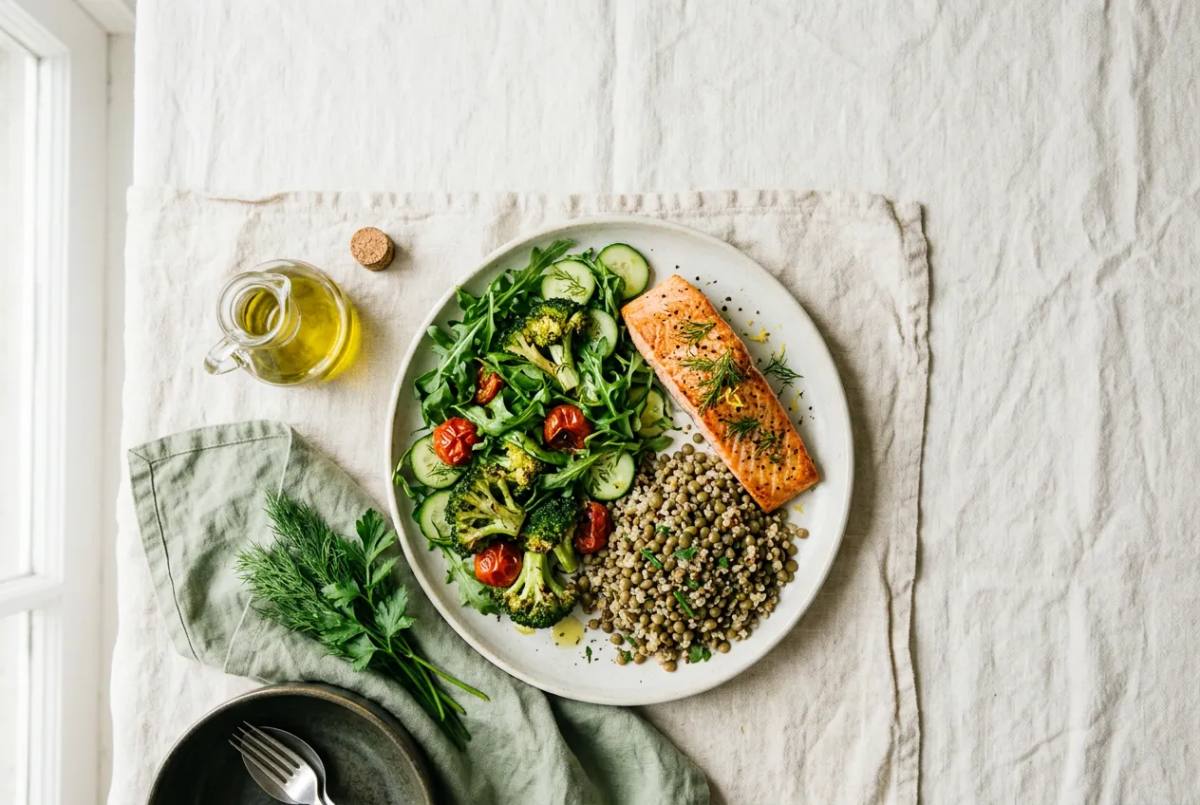
You had lunch — a normal one, nothing excessive. Forty minutes later your eyes are closing, your thoughts thicken, and you find yourself looking for something sweet to go with your coffee. By four in the afternoon it happens all over again. In the evening you notice that your belly has become softer and rounder, even though you eat the way you did five years ago. You get your blood tested — and your doctor says: "Your sugar is normal, everything is fine."
And you leave with the feeling that something is off after all, but with nothing to point to.
I hear this story from women almost every week. And almost always the same process sits behind it — insulin resistance. It develops over years, with almost no symptoms, and — this is the frustrating part — an ordinary glucose test does not show it for a very long time.
The good news, and the reason to read to the end: this is one of the most reversible states in metabolic health. And here, the plate works more powerfully than any pill. 🌱
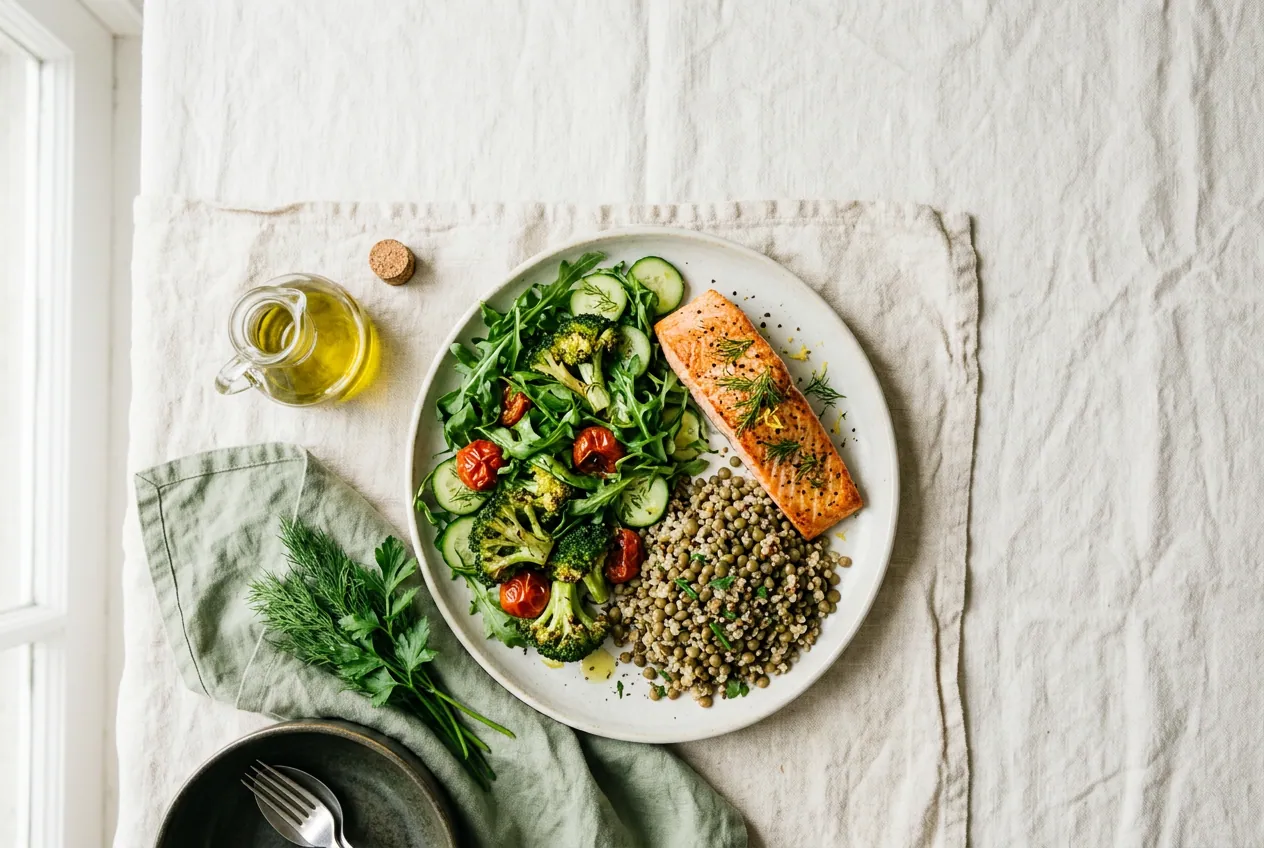
What insulin is — and what exactly breaks
Picture insulin as a polite courier. You eat, glucose enters the bloodstream — and the pancreas sends insulin to knock on the doors of your cells: "Please take this energy." The cells open up, glucose moves inside, and blood sugar quietly returns to normal.
The main recipient is muscle. It takes up around 80% of all the glucose insulin distributes after a meal (DeFronzo, Diabetes Care, 2009). Remember that number — we will come back to it, because it explains almost everything.
Insulin resistance is when the cells stop opening the door on the first knock. Not because they are "broken", but because it is already crowded inside: fat accumulates in muscle and liver, and it gets in the way of the signal.
So the body does the only thing it knows how to do: it knocks louder. The pancreas releases more insulin. Then more still. And blood sugar… stays normal.
That is exactly where the trap lies. Sugar is normal — and the price of that normality goes up every year.
Why a "normal" test result doesn't mean "everything is fine"
This is probably the most valuable thing I can tell you today.
In the large British Whitehall II study, 6,538 people were followed for 13 years (Tabák et al., Lancet, 2009). It turned out that insulin sensitivity starts to fall sharply about 5 years before diagnosis. Fasting glucose, meanwhile, creeps up almost imperceptibly the whole time — and only jumps in the final 2–3 years.
Put simply: fasting glucose is a late alarm. It goes off once compensation has already been used up.
All that time, insulin was high. Nobody had measured it.
Why this conversation matters especially for women 35–50
The scale of the problem is bigger than it looks. In the United States, around 38% of adults are living with prediabetes — and 8 out of 10 of them don't know it (CDC). The share of insulin resistance among people without diabetes rose from 24.8% to 38.4% over twenty years of NHANES data. And only 12.2% of adults turned out to be metabolically healthy across five basic markers — glucose, triglycerides, HDL, blood pressure, waist (Araújo et al., 2019).
Twelve percent. This is not about "people who are overweight" — this is about all of us.
And now the part that is talked about unforgivably little. Estrogen is your ally in insulin sensitivity. It helps muscle respond to insulin and directs fat toward "safe" places — hips and glutes. When there is less of it, fat begins to settle in the abdomen, around the organs — and that is precisely the fat that interferes most with insulin doing its job.
The SWAN study (Greendale et al., JCI Insight, 2019) tracked body composition in 1,246 women and found something very specific: the rate of fat gain doubles roughly two years before the final menstrual period — from 1.0% to 1.7% per year. At the same time, muscle mass is being lost. So glucose has both a harder time leaving the bloodstream and fewer places to go.
Add the natural loss of muscle — 3–8% per decade after the age of 30 — and the picture comes together. Nothing changed in the way you eat. Your physiology changed.
This is not your fault. But it is your area of influence.
(If perimenopause is close to your heart right now, I wrote in detail about preparing for it in «Menopause Is Not a Sentence».)
How insulin resistance develops
The causes line up by strength of evidence roughly like this.
1. Energy excess and visceral fat. When fat tissue overflows, fat "spills over" into the liver and muscle — where it is not supposed to be. It is this internal fat, not the number on the scale, that breaks the insulin signal. Which means the reverse is also true: improvement starts early. Even a 5% reduction in body weight noticeably improves insulin sensitivity in liver, muscle and fat tissue (Magkos et al., Cell Metabolism, 2016).
2. Ultra-processed food. Here we have an experiment of rare honesty: people lived in a clinical unit and were fed two diets, matched for calories, fat, sugar and fiber. On the ultra-processed version, participants ate about 500 kcal more per day — freely, with nobody pushing them — and gained weight (Hall et al., Cell Metabolism, 2019). Observational studies add a 12–15% increase in type 2 diabetes risk on top of that.
3. Liquid sugar. One or two sweet sodas or juices a day — +26% risk of type 2 diabetes (Malik et al., meta-analysis, 310,819 people). The mechanism has been shown directly: ten weeks of fructose-sweetened drinks (25% of calories) increased visceral fat and lowered insulin sensitivity — while identical glucose-sweetened drinks did not (Stanhope et al., JCI, 2009).
4. Inactivity. My favorite experiment, because it is frighteningly fast: healthy young men reduced their activity from ~10,500 to ~1,350 steps a day. After two weeks, peripheral insulin sensitivity had fallen by 17% (Krogh-Madsen et al., 2010). Muscles that don't work stop being a good address for glucose.
5. Short sleep. One night of four hours' sleep is enough for insulin sensitivity to drop by 20–25% (Donga et al., JCEM, 2010). One night. This is the case where sleep is not "about rest" — it is about metabolism, directly.
6. Chronic stress. Here the effect is more modest and the data observational: sustained strain at work is linked to +16% diabetes risk, with higher estimates in women. The mechanism is clear enough — cortisol raises blood sugar and nudges the body toward visceral fat. I looked at this separately in «How Stress "Eats" Your Metabolic Health».
And above all of it — the vicious circle. High insulin is the hormonal setting for "store". It helps you lay down fat and gets in the way of burning it. More visceral fat — stronger resistance — higher insulin. The circle closes, and from the inside it feels like "I eat the way I always did, and the weight keeps going up".
Early signals, and which tests to ask for
Often there are no obvious symptoms at all. But there are recognizable hints:
- sleepiness and brain fog 30–60 minutes after eating (especially after a carb-heavy lunch);
- cravings for something sweet in the second half of the day — often this is not "weak willpower", it is physiology;
- waist circumference growing, even when your weight barely moves;
- skin tags on the neck and in the armpits, darkened velvety patches of skin on the neck or in skin folds (acanthosis nigricans) — a classic skin sign of high insulin;
- persistent hunger soon after eating (more on that in «Why You're Hungry Already at 11 AM»).
What to ask your doctor for (ask is the operative word — these are rarely ordered by default):
| Marker | Why | |---|---| | Fasting insulin | Rises years before glucose — the earliest signal | | Fasting glucose | Prediabetes: 5.6–6.9 mmol/L (100–125 mg/dL) | | HbA1c (glycated hemoglobin) | Average blood sugar over ~3 months; prediabetes: 5.7–6.4% | | HOMA-IR | Calculated from insulin and glucose; most labs treat values from ~2.5 upward as resistance — but the thresholds depend on population and method | | Triglycerides and HDL | Their ratio is a simple indirect marker (in mg/dL, below 2 is considered favorable) | | Waist circumference | For women ≥ 80 cm / 31.5 in is a zone of attention (IDF), ≥ 88 cm / 34.5 in is high risk |
Notice this: fasting insulin is almost never part of a standard check-up. Which is exactly why the "quiet" phase stays quiet.
The good news: this turns around
Now the part I wrote this article for.
The Diabetes Prevention Program (NEJM, 2002) — 3,234 participants with prediabetes. One group received metformin, another made lifestyle changes: 7% weight loss and 150 minutes of walking a week. The result: lifestyle reduced the incidence of diabetes by 58%, metformin by 31%. Every kilogram lost gave, on average, −16% risk.
Ordinary walking outperformed the medication. By almost double.
DiRECT (Lancet, 2018) went further still — in people already diagnosed with type 2 diabetes: 46% remission at one year. And among those who lost 15 kg or more, remission occurred in 86%.
I am not sharing these numbers to send you off to lose weight. I am sharing them to say: this state responds to change. It is not "broken forever" — it is "the signal has been muffled, and it can be heard again".
The Better Plate when insulin is high
The method I use with my clients works here almost literally: the plate becomes a tool for managing insulin.
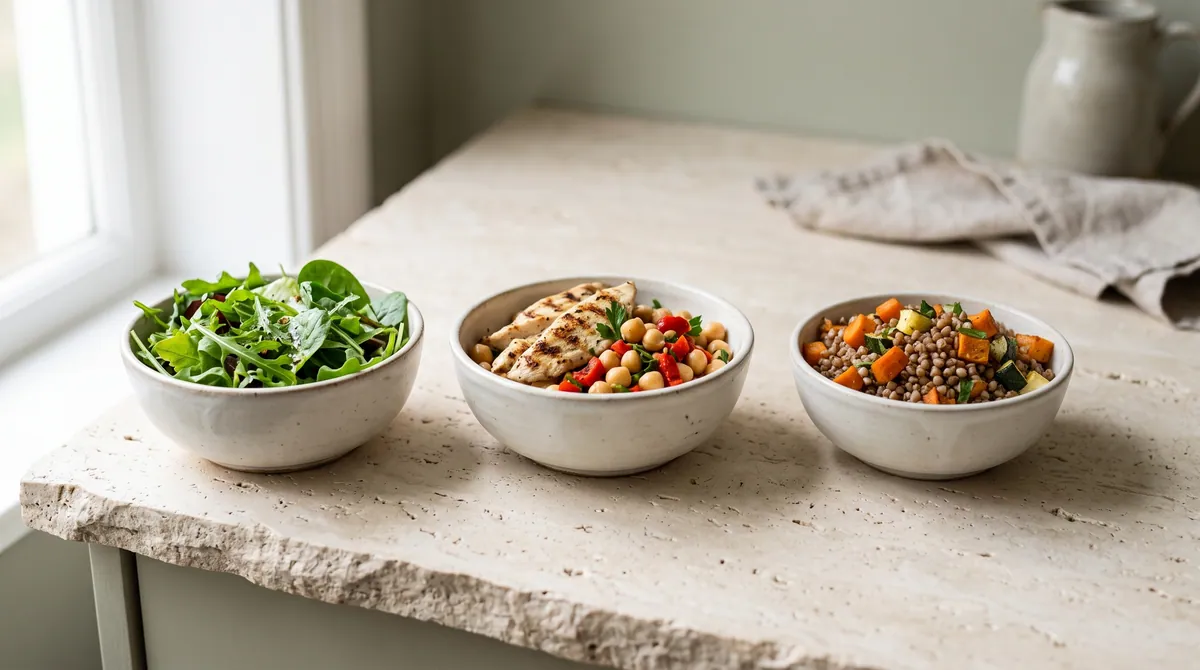
🥦 Half the plate — non-starchy vegetables and greens. This is fiber, and fiber is the most underrated metabolic tool there is. In an analysis of 185 studies and 58 clinical trials (Reynolds et al., Lancet, 2019), the 25–29 g of fiber a day range came with 16–24% fewer cases of type 2 diabetes.
🐟 A quarter — quality protein. Fish, eggs, legumes, poultry, tofu. Protein barely raises glucose, keeps you full, and — most importantly after 40 — preserves muscle, our main address for glucose.
🌾 A quarter — whole, intact carbohydrates. Not "no carbs", but different carbs: buckwheat, quinoa, lentils, chickpeas, wholegrain sourdough bread, sweet potato. Two to three servings of whole grains a day are linked to −32% diabetes risk (Aune, meta-analysis); a high glycemic load, to +26%.
🫒 Plus fat. Olive oil, nuts, avocado, seeds — they slow gastric emptying and smooth out the rise in glucose.
And one move worth an entire diet: meal order
This is my favorite recommendation, because it is free and it works immediately.
In studies from the Weill Cornell team, the very same lunch was eaten in different orders. When vegetables and protein came before the carbohydrates, post-meal glucose was lower by 29% at 30 minutes and by 37% at 60 minutes, and insulin was significantly lower too (Shukla et al., Diabetes Care, 2015). In the follow-up work, "carbs last" reduced the glucose peak by roughly 40–54% compared with "carbs first".
An honest caveat: these are small crossover studies. But the result reproduces, including in people with prediabetes, and there is no risk in it whatsoever. Salad first, then protein, then the starchy side — that is the whole technique.
Educational note: The Better Plate builds on healthy-eating principles, including ideas inspired by the Harvard Healthy Eating Plate. Better With Anna is not affiliated with Harvard University.
What to eat when insulin is already high
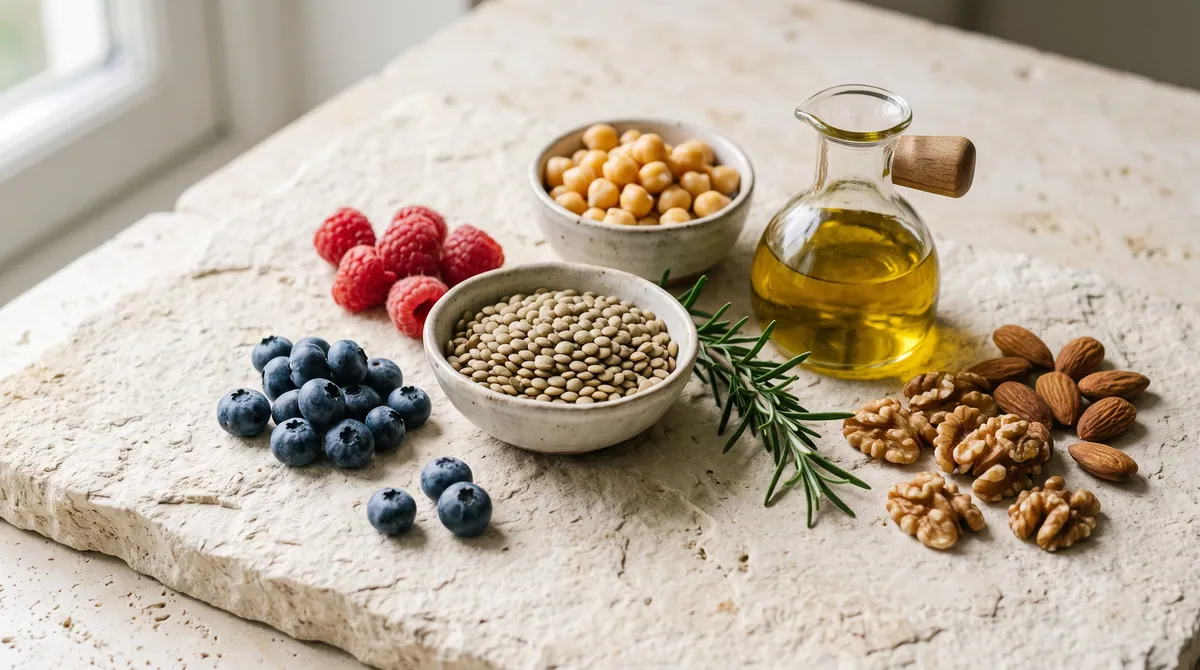
What to lean on — and the numbers behind it:
- Legumes. The most underrated food in this whole topic: the highest intake is linked to −35% diabetes risk, and a single serving of lentils a week to −33% (Becerra-Tomás et al., 2017).
- Berries. Blueberries, 3+ servings a week — −26% (Muraki et al., BMJ, 2013).
- Olive oil — around −16% among those who use it most (observational data).
- Unsweetened yogurt, 80–125 g a day — −14%.
- Oily fish — yes, for the omega-3s and the protein. But honestly: omega-3 supplements have not shown a convincing effect specifically on insulin resistance. Eat the fish; don't buy capsules "for insulin".
- A Mediterranean way of eating. In the PREDIMED trial, diabetes incidence was lower by roughly 40–52% — with no calorie counting.
- Fermented foods (kefir, sauerkraut, kimchi) — a promising direction (a 2021 Stanford study showed increased microbiome diversity and a drop in 19 inflammatory proteins), but there is no direct data on insulin itself yet. More on this in «What to Feed the Good Bacteria».
What to have less of — without banning anything:
- sweet drinks and juices — this is the single most effective change (+26% risk per 1–2 servings a day);
- ultra-processed products — not "chemicals", just food engineered so that you eat more of it;
- refined carbohydrates on their own — white bread, cookies, cereal "by themselves", with no protein, fat or fiber alongside.
Three tactics that change a lot:
- A protein breakfast instead of a carbohydrate one. It gives a gentler rise in glucose — and, more interestingly, it also lowers the spike after lunch (the "second meal" effect). I wrote about this separately: «Why Protein at Breakfast Is Important».
- Fewer snacks, more pauses. At identical calories, two full meals turned out to be better than six small ones: greater weight loss, less liver fat, better insulin sensitivity (Kahleová et al., Diabetologia, 2014). Constant snacking keeps insulin elevated all day long.
- An earlier dinner. The very same dinner at 10 p.m. instead of 6 p.m. produced an 18% higher glucose peak and 10% less overnight fat burning (Gu et al., Johns Hopkins, 2020).
And about vinegar, which everyone is writing about right now: roughly 20 g of vinegar before a carbohydrate meal improved post-meal insulin sensitivity by 34% in people with insulin resistance (Johnston, Diabetes Care, 2004). The studies are small and short. It is a pleasant dressing for your salad, not a treatment — please treat it as exactly that.
Not the plate alone

1. A walk after eating. Light walking instead of sitting lowers the post-meal glucose rise by around 17% — and even 2–5 minutes work, if you start soon after the meal (Buffey et al., Sports Medicine, 2022). Ten minutes around the block after dinner is the most underrated habit on this list.
2. Strength training. Remember the 80% of glucose that muscles take up? Strength work literally expands that reservoir. In a 2025 meta-analysis in people with type 2 diabetes, it lowered HOMA-IR by 1.15 and HbA1c by 0.55 points, and added around 0.9 kg of muscle. Two sessions a week already count.
3. Sleep, 7–9 hours. Coming back to the number from earlier: one night of four hours costs you 20–25% of your sensitivity. Sleep here is not a nice bonus — it is a lever of the same order as food.
4. Stress. Not "stop worrying", but something concrete: 10 minutes of quiet, a walk without your phone, a few breaths before a meal. Cortisol and insulin work as a pair.
Briefly about FMD
Since we are talking about resetting metabolism — in the USC study led by Valter Longo (Science Translational Medicine, 2017), 71 participants completed three monthly cycles of a five-day fasting-mimicking diet: around 2.7 kg lost, predominantly fat, waist smaller by 2–5 cm, systolic blood pressure lower by 4.5 mmHg, IGF-1 reduced.
An important detail that usually gets left out: fasting glucose fell only in those whose glucose was elevated to begin with. In metabolically healthy participants, it did not change.
FMD is a structured protocol, not a way of life, and it does not suit everyone: not in pregnancy or breastfeeding, not with medicated diabetes, not with disordered eating, and not without a conversation with your doctor. The details are in «FMD Diet: How to Trick Time and Reset Your Metabolism in 5 Days».
Five myths that get in the way
"Carbs cause diabetes." No. What causes problems is quality and quantity: a high glycemic load, +26% risk — while whole grains (−32%), legumes (−35%) and fruit actually lower it.
"Fruit is off limits." Whole fruit protects; juice does not. In Harvard research, swapping three servings of juice a week for whole fruit lowered risk by 7%, and swapping for blueberries by 33% (Muraki, BMJ, 2013).
"You need keto." You don't. DiRECT achieved 46% remission on a low-fat diet, and the DPP on an ordinary balanced one. The lever is reducing internal fat, not eliminating carbohydrates. Keto may suit a particular person, but it is not a condition of success.
"This is forever." The numbers above say otherwise.
"It doesn't apply to slim people." It does. Around 23.5% of adults with a normal BMI are metabolically unhealthy (NHANES). Thin on the outside is not always thin on the inside; visceral fat is invisible on the scale.
Small steps for this week
You don't need to change everything. Choose one — and hold it for a week:
- Meal order: vegetables first, then protein, then carbohydrates. Free, and you can start at dinner tonight.
- One drink: swap a sweet drink or a juice for water, tea or unsweetened coffee.
- 10 minutes after dinner: a calm walk. Not a workout — just walking.
- Protein at breakfast: eggs, cottage cheese, yogurt with nuts instead of porridge with banana and honey.
- Sleep: go to bed 30 minutes earlier three nights in a row and watch what happens to your sugar cravings the next day.
And the most important thing
Insulin resistance is not a life sentence, and it is not the result of your "weak willpower". It is the body's slow adaptation to the way modern life is arranged: plenty of available food, little movement, short sleep, constant strain. Plus — if you are over 40 — a shifting hormonal background that nobody asked you about.
But precisely because it is an adaptation, it knows how to unwind. Not in a week. But not in ten years either: insulin sensitivity begins to improve within a few weeks of a calmer plate, movement and sleep — long before the scale changes.
Start with one step. Not with a perfect Monday — with one dinner where the salad comes first. 💚
And I will be here to support you.
Educational note: this material is informational and does not replace a consultation with your doctor. Insulin resistance, prediabetes and diabetes require specialist supervision. Do not change your treatment, begin FMD or adjust your diet on your own if you have diabetes, take glucose-lowering medication, are pregnant, breastfeeding, or live with a chronic condition — discuss it with your doctor. The Better Plate uses educational healthy-eating principles, including ideas inspired by the Harvard Healthy Eating Plate; Better With Anna is not affiliated with Harvard University.
Frequently asked questions
Can insulin resistance be reversed completely? In many cases yes, and the earlier you start, the easier it is. The DPP showed a 58% reduction in diabetes incidence through lifestyle; DiRECT showed 46% remission even after diagnosis. Improvement starts early: there is a noticeable effect already at 5% weight loss.
Which tests should I do to check myself? Fasting insulin, fasting glucose, HbA1c, triglycerides and HDL. From the insulin and glucose values your doctor can calculate HOMA-IR. Add a waist measurement with a tape measure — it is free and surprisingly informative.
Do I have to give up carbohydrates? No. Giving up carbohydrates is not a condition of success. What matters more is their type (whole instead of refined), their order (after vegetables and protein) and their company (protein, fat and fiber alongside).
Can I eat fruit? Yes, whole fruit is both allowed and worth eating. Better together with protein or nuts, and not in the form of juice. Berries are the optimal choice.
Does insulin resistance happen in slim people? Yes. Around a quarter of people with a normal BMI are metabolically unhealthy. What matters is not your weight, but how much visceral fat you carry and how much working muscle you have.
How quickly will I feel a difference? Post-meal energy and sugar cravings often shift within 1–3 weeks. Lab markers — insulin, HOMA-IR, HbA1c — are worth repeating after 3 months; earlier than that they will tell you very little.
Will HRT (hormone therapy) in menopause help? The data lean favorable: in the WHI study, estrogen-plus-progestin therapy came with roughly 21% fewer new cases of diabetes. But hormone therapy is not prescribed for diabetes prevention — that decision is made with your doctor, weighing all your indications together.
Would you like to understand what is happening with your metabolism specifically — from data rather than from how you feel? Start with a biomarker analysis or an express consultation: together we will look at your insulin, HOMA-IR and lipids and build a plan that can survive your real life. If you would like a structured start, there is the Total Reset program: 5 days of FMD and 14 days of The Better Plate. And there is more about the method itself on the Better With Anna homepage. 🌱
Get new Better With Anna material straight to your inbox — calm, useful, no spam.
Yours sincerely, Anna Bertoldi