Mitochondria, Metabolism and Longevity: A Nutritional Guide to Preserving Youth
Discover how your cellular health dictates your energy levels and aging process. In this guide, we explore a science-backed yet accessible approach to supporting your mitochondria through Better Plate nutrition, movement, and intentional recovery—without restrictive diets or miracle supplements.
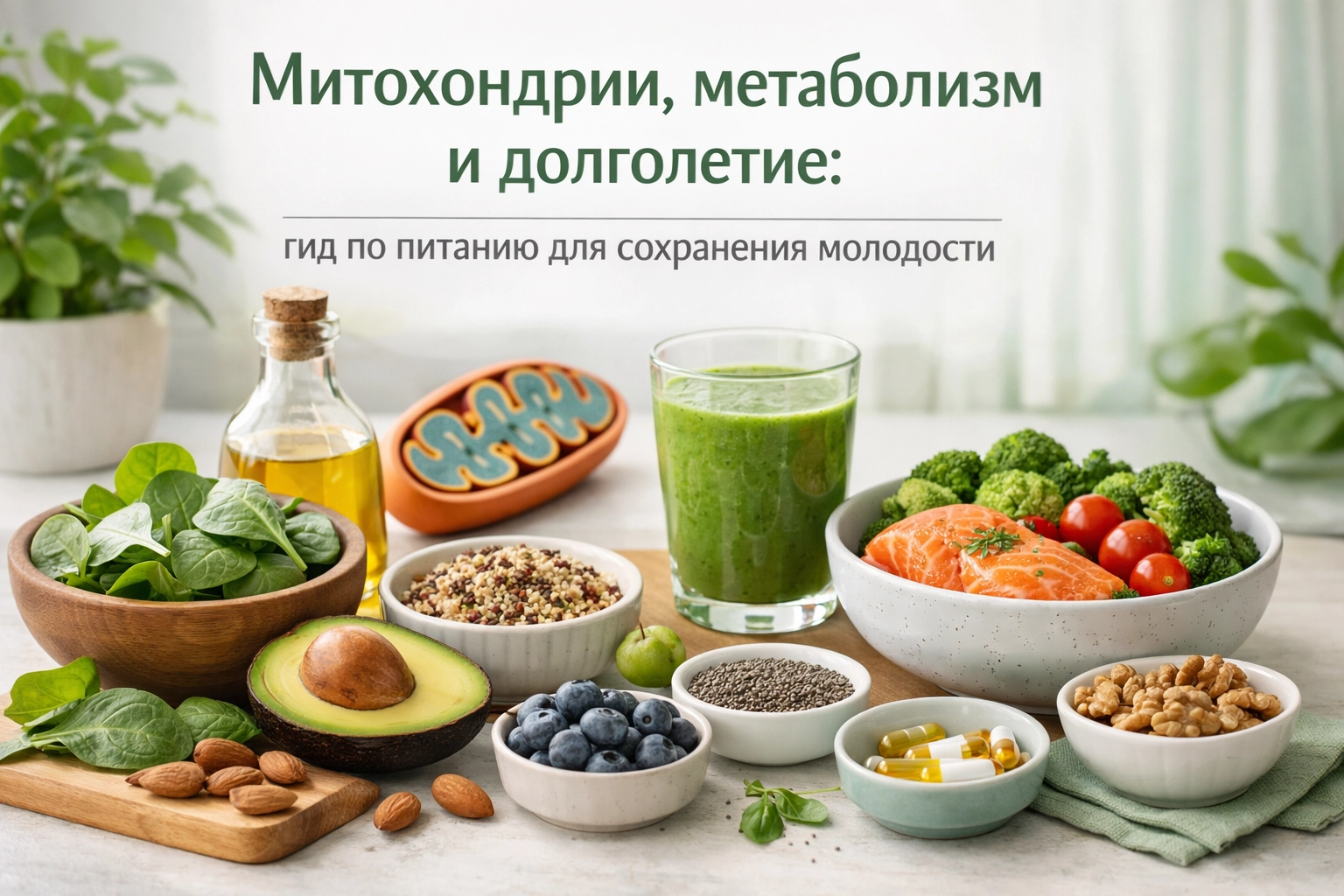
Have you ever wondered why two people the same age can look and feel completely different? One maintains vitality, a clear mind and energy late into the evening, while the other already battles chronic fatigue by midday. ☕️
The answer is often not genetic luck, but what happens deep inside our cells. True aging and, more importantly, healthy longevity begin at the level of invisible structures — the mitochondria.
At Better With Anna we believe food is more than calories. It is information and fuel for your internal “power plants.” Today I’d like to invite you on an exciting journey into the cell to understand how, with a simple plate of food, we can slow biological clocks and regain our energy. ✨
What are mitochondria? Small engines of a big life
Imagine the body as a vast metropolis — the mitochondria are its power plants. They are found in almost every cell of our body (only erythrocytes don’t have them). In some energy-intensive cells — for example in the heart or brain — there can be thousands. 🔋
Their main task is cellular respiration. They take nutrients from the food we eat and the oxygen we breathe and convert both into the molecule ATP (adenosine triphosphate). ATP is the universal energy currency of our body. Without it no muscle would contract, no thought arise, and no skin cell renew itself.
But the role of mitochondria goes far beyond energy production:
- Regulation of metabolism: They decide whether fats are burned or stored.
- Cellular resilience: Mitochondria help cells adapt to stress.
- Signaling: They participate in the process of “cellular cleaning” (apoptosis) and remove damaged cells in time so they don’t become a problem for the organism.

Why mitochondrial health is the key to your longevity
When we talk about “metabolic health,” we basically mean how efficiently our mitochondria work. With age, number and quality can decline — this process is called mitochondrial dysfunction. It underlies many age-related changes.
Why is this especially important for you now?
- Stable energy: When mitochondria run at full speed, you’re not dependent on endless cups of coffee. Energy is distributed evenly throughout the day. ⚡️
- Faster recovery: Whether recovery after training or after a demanding workweek — healthy cells manage it significantly faster.
- Cognitive well-being: The brain consumes enormous amounts of energy. Supporting the mitochondria protects against “brain fog” and keeps thinking clear for many years.
- Weight regulation: An efficient metabolism depends directly on the mitochondria’s ability to “burn” fuel. When they “puff,” the body switches to savings mode. ⚖️
How can you tell your cells need support?
Mitochondrial health is not a diagnosis given by a doctor. It’s a dynamic state we can feel every day. 🔎
Signs your mitochondria are working great:
- You wake up refreshed (without caffeine).
- You have stable blood sugar levels, no intense hunger pangs.
- Your body adapts easily to physical strain.
- You recover quickly after stressful situations.
- You look fresh, your skin stays firm.
Signals your mitochondria are under pressure:
- Chronic fatigue: Even after long sleep you feel “drained.”
- “Brain fog”: Difficulty concentrating and increasing forgetfulness.
- Slow recovery: A simple walk or light training leads to lingering weakness.
- Metabolic strain: It’s hard to maintain a healthy weight despite dietary restrictions.
- Stress sensitivity: Even small events throw you off balance.
The good news is: mitochondria are incredibly adaptable. They constantly renew themselves, and we can directly influence this process through our daily habits. 🔄
Pillars of lifestyle: creating an environment where cells thrive
Before we get to food: it’s important to understand that mitochondria love a certain rhythm. They thrive where there is a balance between stress and recovery.
- Movement as a signal for renewal. Aerobic activities (brisk walking, swimming) stimulate the formation of new mitochondria. Strength training makes existing mitochondria more powerful.
- Good sleep. Repair processes take place in cells precisely at night. Without sleep mitochondria begin to produce too many free radicals and damage themselves. 🌙
- Stress balance. Chronically high cortisol literally suffocates cellular respiration. Mindfulness practices, magnesium baths and simply time for yourself are not luxuries but necessities for the cells.
- Stable blood sugar levels. Strong glucose swings cause oxidative stress in the mitochondria. The Better Plate approach with its nutrient balance is the ideal solution to this problem. 🥗

Food-first: nutrients for energy instead of supplements
Many look for salvation in expensive supplements, but nature has already packaged everything necessary in foods. Within the Better Plate philosophy we rely on whole foods rich in cofactors for energy production. 🥦
Here is an overview of the most important nutrients and the foods that contain them:
1. Supporting coenzyme Q10
This molecule is a central link in the electron transport chain of the mitochondria.
- Where to find it: Fatty fish, spinach, broccoli, cauliflower, sesame and peanuts.
2. B vitamins for metabolism
They help convert carbohydrates and fats into ATP.
- Where to find them: Leafy greens (parsley, spinach), legumes, mushrooms, whole grains (quinoa, buckwheat), eggs.
3. Magnesium — the spark of life
Magnesium is involved in over 300 biochemical reactions, and ATP production is not possible without it.
- Where to find it: Pumpkin seeds, almonds, avocado, dark chocolate (at least 85%), seaweeds. 🥑
4. Omega‑3 for cell membranes
Mitochondria have a double membrane. For it to be flexible and allow nutrients to pass well, the right fats are needed.
- Where to find them: Flaxseed, walnuts, fatty fish, chia seeds.
5. Polyphenols and antioxidants
They protect mitochondria from damage that occurs during energy production.
- Where to find them: Berries (blueberries, raspberries), apples, beetroot (a source of nitric oxide for the vessels), cruciferous vegetables, cold‑pressed olive oil. 🍎
The Better Plate formula for your cells
How do you turn this knowledge into a lunch or dinner? We use a simple and elegant formula that provides stable energy without overloading the system:
- 1/2 plate — vegetables and greens: These are your antioxidants and fiber. Spinach, broccoli, arugula, beetroot, zucchini. The more colorful, the broader the protection. 🌈
- 1/4 plate — nutrient‑rich carbohydrates: Quinoa, buckwheat, amaranth or legumes. They provide slow energy without sugar spikes.
- 1/4 plate — high‑quality protein and healthy fats: Avocado, nuts, seeds, fish or high‑quality meat. Fats are structural material for your cells.

Example of an ideal lunch: A mix of fresh spinach and arugula with roasted beetroot, a serving of quinoa, avocado slices and a handful of pumpkin seeds, dressed with olive oil and lemon juice. Simple, beautiful and incredibly good for your mitochondria.
Practical step: “Spring Restart”
I know how hard it is to change habits alone, especially with the flood of information. That’s why I’ve condensed all these scientific principles into a ready solution in my program Spring Restart. 🌸
This is not just a 5‑day menu. It’s a lovingly assembled nutrition plan, based on nutrient‑dense foods that naturally support your mitochondria.
Many ingredients we use in the “Restart” menu correspond directly to what we talked about today:
- Leafy greens, spinach and broccoli — for B vitamins.
- Avocado, nuts and flaxseed — for the health of cell membranes.
- Mushrooms and beetroot — to support cellular respiration.
- Berries and apples — to protect against oxidative stress.
- Quinoa and buckwheat — for stable blood sugar levels.
This is not a medical protocol, but a gentle way to give your body resources for renewal. We use no aggressive methods — we simply create the conditions in which your cells can finally “breathe” and work efficiently.

Longevity starts today
We often think of longevity as something distant that happens (or not) in decades. The truth is: longevity is built here and now. Every plate, every walk in the park and every hour of deep sleep is your contribution to the health of your mitochondria. 🛡️
Protect your energy. Nourish your cells. Design your meals so they support your future. Remember: healthy, strong mitochondria are your most reliable asset for preserving youthfulness, beauty and vitality for many years.
If you’re ready to take this step of renewal with us, I look forward to seeing you in our community. Everything is easier — and tastier — together!
With care for your cells, Anna Bertoldi
Ready for renewal?
Join our program Spring Restart and feel the difference after just 5 days. Learn more and reserve your spot at: 👉 https://betterwithanna.health/p/fmd/
Follow our tips and daily life on Instagram: \_anna.bertoldi\_ 📸