Thymus and Longevity: What the New Research Really Says
Thymus — the “school of immunity”: how to support it after 40 through habits.
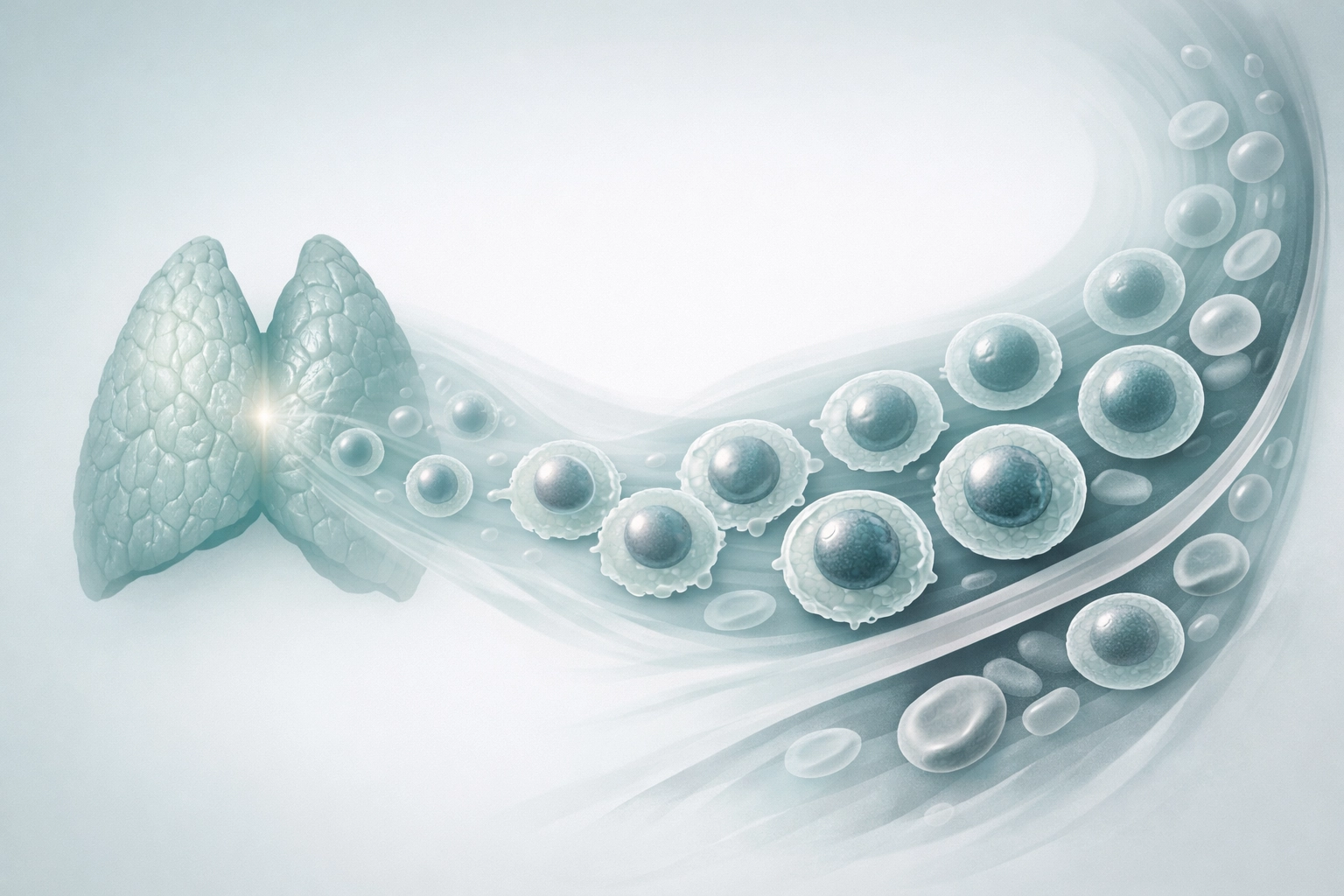
Excerpt: Thymus — the “school of immunity”: how to support it after 40 through habits.
Aging is often visible from the outside. But the “quality of age” is largely determined by quiet systems inside — including the immune system.
The thymus is a small organ behind the sternum. You can think of it as the school of immunity.
After 40 it usually gets smaller. But in some people it remains better preserved — and studies link this to more favorable health outcomes.
No sensationalism: this is not a “secret to longevity.” It’s a reminder that habits really matter.
Thymus — the “school of immunity”
Imagine the immune system is a team. The thymus is its school: a place where “rookies” learn to respond to threats precisely and without causing chaos inside the body.
Useful to know:
- where it is: behind the sternum, in the upper chest
- what it does: helps the immune system “learn” and be more accurate
- why it comes up after 40: with age the thymus usually shrinks, but in some people it stays more active — and that can be a good sign of immune resilience

What the studies actually showed (very briefly)
Scientists looked at large databases of CT scans and noticed a pattern:
- when the thymus looks more “preserved,” better long‑term outcomes are more often observed
- this is especially interesting in adulthood, when immune resilience begins to play a more noticeable role
And yes — this is still an association, not a promise and not a “push‑button” for eternal youth.
“So what does this mean for me?” — practical takeaway
The thymus is part of the immune system that likes a calm, predictable background.
Things that usually harm it (and you):
- chronic stress and lack of sleep
- excess weight and metabolic “swings”
- smoking
Things that help — simple measures that pay off especially after 40:
- regular eating without chaos
- movement that adds up, not just maintains
- making sleep a priority, not a reward

A small caveat (without being pedantic)
Studies show a link, not a direct cause. The thymus is not a “magical organ,” but one of the tools in a large orchestra of health.
The most reasonable strategy is to support the overall background: nutrition, sleep, movement, stress management.
_Disclaimer: this material is for informational purposes and is not medical advice. For any complaints or illnesses, consult a doctor._
Better With Anna’s perspective: supporting the thymus through Better Plate and habits
If the thymus is the “school of immunity,” our job is to create normal conditions for it: resources, regularity, and fewer “swings.” That’s why Better Plate fits so well with the topic of longevity.
What works in real life:
- Assemble a Better Plate.
Half the plate — vegetables/greens, a quarter — protein, a quarter — complex carbs + some healthy fats. This is about steadier energy and a calmer metabolism.
- Protein — not "on a whim," but regularly.
Fish, eggs, poultry, legumes, fermented dairy — choose options that feel comfortable.
- Move moderately, but often.
Walking, light strength training, Pilates — so that you feel better after a workout, not drained.
- Sleep is your immune capital.
7–9 hours and a predictable schedule (as much as possible) — one of the most underrated investments in resilience.
- Reduce metabolic noise.
Fewer sugary snacks, more regular meals — this helps both weight and inflammatory background.

Final thought
After 40, stability beats “hacks.” And the thymus is a nice symbol of this idea: the immune system likes being cared for consistently.
If you want to build a clear nutrition system for your life, start with our analysis services — or check daily ideas on Instagram: \_anna.bertoldi\_.
Sources / medical studies
- Simon Bernatz et al. Thymic health consequences in adults. _Nature_ (2026)
https://www.nature.com/articles/s41586-026-10242-y
- Simon Bernatz et al. Thymic health and immunotherapy outcomes in patients with cancer. _Nature_ (2026)
https://www.nature.com/articles/s41586-026-10243-x
- K.A. Kooshesh et al. Health Consequences of Thymus Removal in Adults. _New England Journal of Medicine_ (2023)