Why You're Hungry Already at 11 AM — and How to Fix It
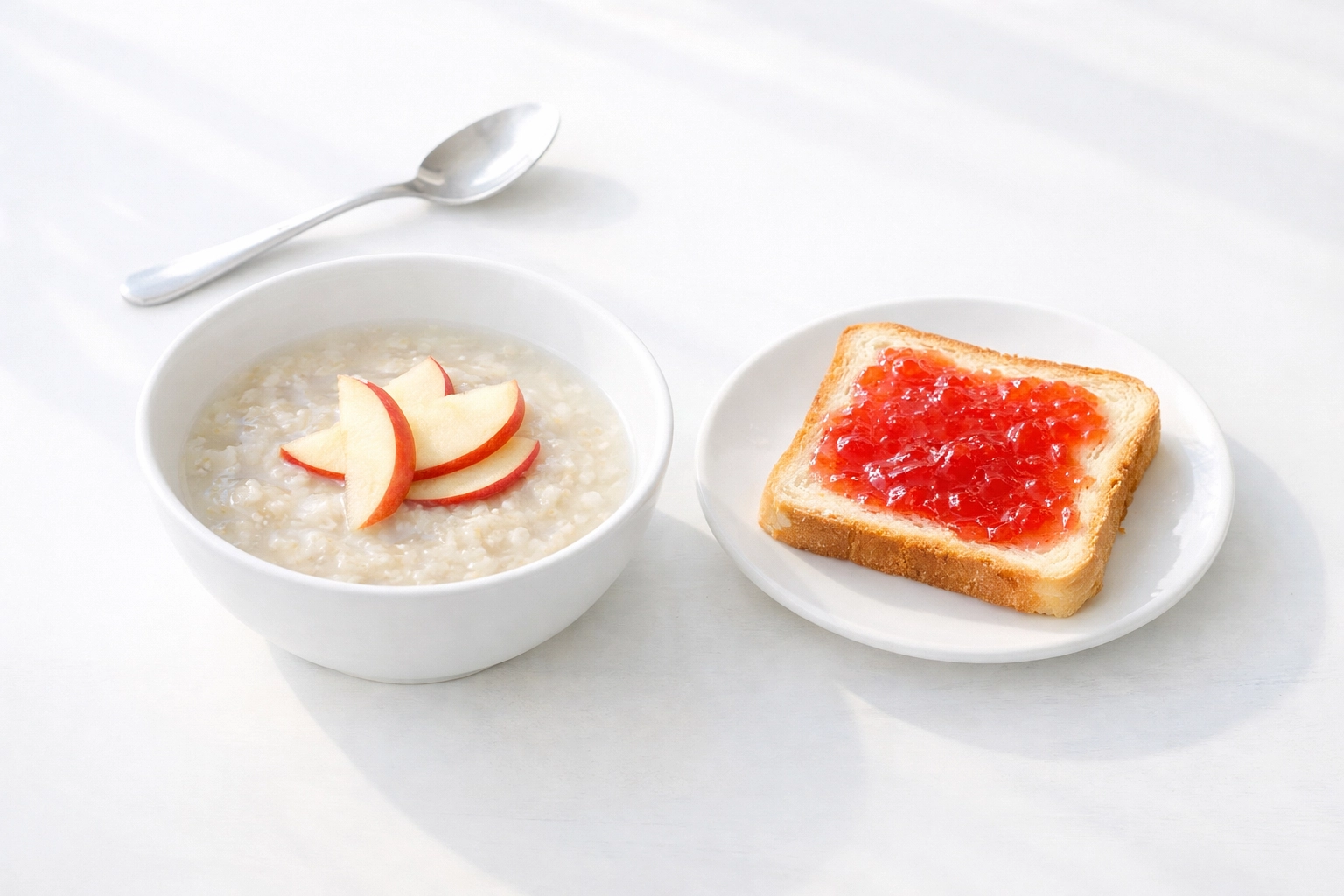
Familiar situation? You had a substantial breakfast at 8:30 — maybe it was “healthy” oatmeal made with water or yogurt with fruit. You’re full of determination to conquer the day, but by 11:00 thoughts about work are pushed aside by one persistent idea: “What should I eat?”
Your stomach growls, concentration drops, and your hand reaches for a pastry or a fifth cup of coffee.
Many blame lack of willpower, a “fast metabolism,” or stress. But I’m Anna Bertoldi, and I want to reassure you: it’s not about you, it’s about the biochemistry of your plate.
Today we’ll break down why standard breakfasts “betray” us by mid-morning and how to build the ideal meal that will keep you fueled until lunch.
The "healthy" breakfast trap: why porridge doesn’t work?
For decades we’ve heard that oatmeal is the best breakfast. But let’s look at it from a physiological perspective.
When you eat empty carbs (even those considered complex, like rolled oats cooked in water without additions), your body quickly breaks them down into glucose. Blood sugar spikes. 🚀
In response to that spike, the pancreas releases insulin — a hormone whose job is to “put” sugar into cells. Insulin does its job so effectively that blood sugar falls as fast as it rose. 📉
Result: Within 1.5–2 hours your blood sugar can be below normal. Your brain receives an SOS signal: “Energy is zero, fuel needed urgently!” That’s the moment you feel that unbearable hunger at 11 AM.
What usually goes wrong:
- Oatmeal made with water: Pure carbs without the “brakes” of fats and proteins.
- Toast with jam or honey: A hit of sugar.
- Fruit smoothies: Fiber is broken down, sugar is absorbed instantly.
- Fat-free yogurt: Often contains more sugar for taste than regular yogurt, and no satiating fats.

The satiety formula: Three pillars of The Better Plate
To avoid thinking about food until 3 PM, your breakfast needs to be not just “voluminous” but metabolically correct.
In my methodology The Better Plate we learn to assemble a plate so that blood sugar rises smoothly and stays stable. For that we need three mandatory components:
1\. Protein — your foundation 🍳
Protein is the most satiating macronutrient. It slows gastric emptying and suppresses ghrelin production (the hunger hormone).
- _Examples:_ Eggs, cottage cheese, Greek yogurt, lightly salted fish, chicken breast, tofu, or a quality protein powder.
2\. Healthy fats — long-lasting fuel 🥑
Fats slow carbohydrate absorption and signal to the brain that you’ve had enough. Without fats you’ll feel “emptiness” in your stomach very soon.
- _Examples:_ Avocado, nuts, seeds, olive or butter, egg yolks.
3\. Complex carbs and fiber — steady energy 🥦
Fiber creates volume and “binds” sugar, preventing sharp spikes.
- _Examples:_ Whole-grain bread, unrefined grains (quinoa, buckwheat), and, of course, plenty of greens and vegetables.
What this looks like in practice
Let’s compare.
Option A (Hungry at 11:00): Oatmeal made with water with an apple and honey. This is almost pure sugar. Lots of energy, but it burns like a match.
Option B (Full until 3 PM — by The Better Plate system): Two poached eggs (protein + fats) + half an avocado (fats + fiber) + a slice of whole-grain bread (complex carbs) + a handful of spinach (fiber).
Feel the difference? In the second option we’ve given the body everything it needs to run like clockwork.

3 breakfasts that keep you until lunch
I know mornings are short for everyone. That’s why my recipes usually take 5 to 10 minutes. Here are ideas to help you get through the morning without snacking:
- Turkish breakfast on a plate: Greek yogurt (plain!), a couple of boiled eggs, sliced cucumber, a few olives and a drizzle of olive oil. Sounds unusual? Try it — it’s incredibly filling.
- Maxed-out sandwich: Whole-grain bread, a layer of cream cheese, plenty of lightly salted fish and a large bunch of greens (arugula, cilantro, dill).
- Protein oatmeal: If you can’t live without porridge — cook it in water, but add a scoop of protein powder or two egg whites at the end (stirring thoroughly), and be sure to top with chia seeds or walnuts.
Want more specifics?
I prepared a detailed PDF guide with 3 breakfast recipes, where all weights and step-by-step instructions are listed.
How to get the PDF for free:
- Comment BREAKFAST on this post on my Instagram.
- Or pick it up in my Telegram channel, where I share daily health hacks.

Not just food: why else do we want to eat in the morning?
Although the composition of the plate is 80% of success, there are a couple more factors that make us nibble before lunch.
1\. Hidden thirst 💧
Our brain often confuses thirst signals with hunger. The centers responsible for them are located near each other in the hypothalamus. If you woke up and drank coffee first, skipping water — by 11 AM you’ll want to eat simply because your cells need fluids. Tip: Start the morning with a glass of warm water.
2\. Hormonal chaos from lack of sleep 😴
If you slept less than 7 hours, morning cortisol (the stress hormone) will be higher than normal. Cortisol drives the body to crave quick carbs for “survival.” Also, with lack of sleep leptin (the satiety hormone) drops and ghrelin rises. You will objectively feel hungrier, even if you’ve eaten a lot.
3\. Morning stress 📉
Cortisol and adrenaline from commuting or unpleasant emails make the body burn glucose faster. If your breakfast was “empty,” stress will wipe out the remnants in minutes.
Why I don’t give “just lists of foods”
In my consultations and programs, such as Express Consult or in personal coaching, I always teach one thing: understanding the principle.
You can lose a recipe. You can forget a grocery list at home. But if you understand how proteins, fats and carbohydrates affect your state, you can assemble the perfect breakfast even at an airport or a gas station.
My goal is to free you from constant hunger and dependence on snacks. When your metabolic health is in order, food becomes just quality fuel, not a source of anxiety.

Your strategy for tomorrow
Let’s agree: tomorrow you’ll try to change your usual routine.
- Drink a glass of water right after waking up.
- Add a portion of protein to your breakfast (at least 20–30 g).
- Don’t forget healthy fats.
- Message me on Telegram and tell me how you felt at 11 AM.
By the way, there are already 3,765 people in my channel who, like you, strive for mindful eating without diets and suffering. We discuss everything: from how to choose bread in the supermarket to deep analysis of lab tests. Join us — it’s cozy there! ✨
If you’re ready to go further and want to systematically reset your body, check out our seasonal programs like the FMD Marathon or Detox. It’s a great way to give your metabolism a “magical kick” and feel lighter.
See you on Telegram and on the pages of the Better With Anna blog!
_This article is for educational purposes and is not medical advice. If you have chronic diseases, disorders of carbohydrate metabolism (type 2 diabetes, insulin resistance) or special dietary needs, be sure to consult your treating physician before changing your diet._