Not just what, but which: why the quality of food matters just as much
You assembled the perfect plate — but half the benefit depends on which products they are and how you handled them. A calm guide: quality without fanaticism, organic, washing and storage.
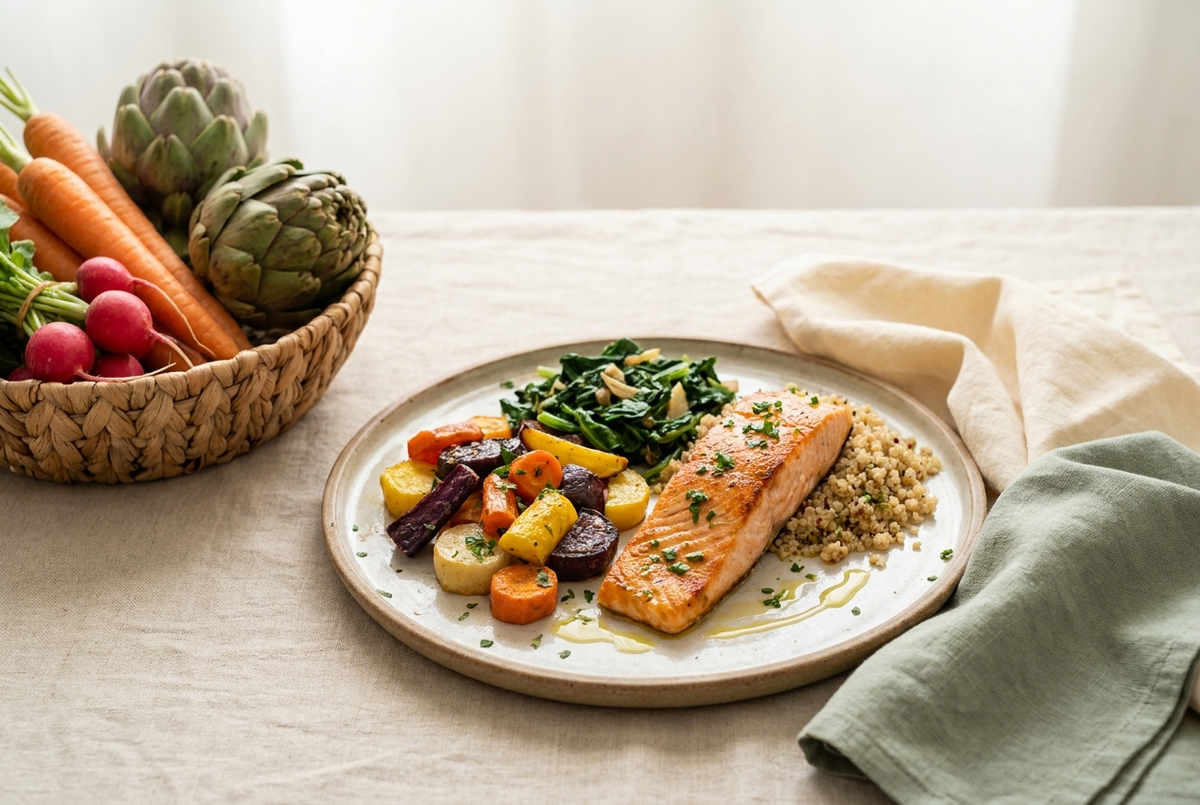
You assembled the perfect plate. Half — vegetables, a quarter — good protein, a quarter — whole grains, topped with a spoon of olive oil. You even started with a salad, like we love at The Better Plate. And that's wonderful. 🌱
But let me ask a question we often skip: what kind of vegetables were those? Where were they grown, how long did they sit, how were they treated — and how did you wash them before putting them on the plate?
The thing is, what we eat is only half the story. The other half is the quality of that food. The same “tomato in a salad” can be picked yesterday and full of flavor and vitamins — or picked green three weeks ago, arrive pale and mostly empty. Today I want to calmly, without fanaticism or scare tactics, go through how to choose for quality — without extra stress or overspending.
What we actually mean by “quality”
When we hear “quality food,” many imagine price or a pretty package labeled “eco.” But quality is about something else. I look at four things:
- Freshness. The longer a vegetable or fruit sits after harvest — in light, in warmth, in air — the more vitamins it loses. Vitamin C and folates are especially sensitive. So a “fresh” salad that traveled and sat for a week can sometimes be poorer than frozen (more on that below).
- How the product was grown. Soil quality, growing method, variety. That affects both taste and nutrient density.
- Residual substances. Pesticides, wax, treatments for storage. Not a reason to panic, but a reason to learn how to wash properly.
- Degree of processing. Perhaps the most important and the most underestimated. A whole vegetable and a “product made from a vegetable” with a long ingredient list are two different things.
I'll say a bit more about the last point. More and more studies link ultra-processed foods (the ones with long lists of additives that don't grow in a garden) to worse health outcomes. That doesn't mean “never” — it means that it's better to build the base of your plate from recognizable, whole foods, and leave processed foods as guests, not hosts.
In a previous piece I already wrote: at The Better Plate ingredient quality matters more than quantity. You can eat “by the scheme,” but if the foods are limp, processed, and sourced from who-knows-where — the plate loses half its meaning.
Good news: to raise the quality of your food, you don't need to spend a fortune or become a fanatic. You need to understand a few simple things — and we'll walk through them in order: what to buy, how to wash, and how to store.
Organic and farm-grown — without fanaticism
The word “organic” (or “bio”) sparks a lot of debate. Let's be honest.
What research really confirms: organic products on average contain fewer pesticide residues and are grown without synthetic pesticides. But the difference in vitamin and mineral content is most often small and ambiguous. So “organic” is primarily about cleaner composition, not magical super-benefit. It's important to understand that so you pay for a concrete benefit, not for a feeling.
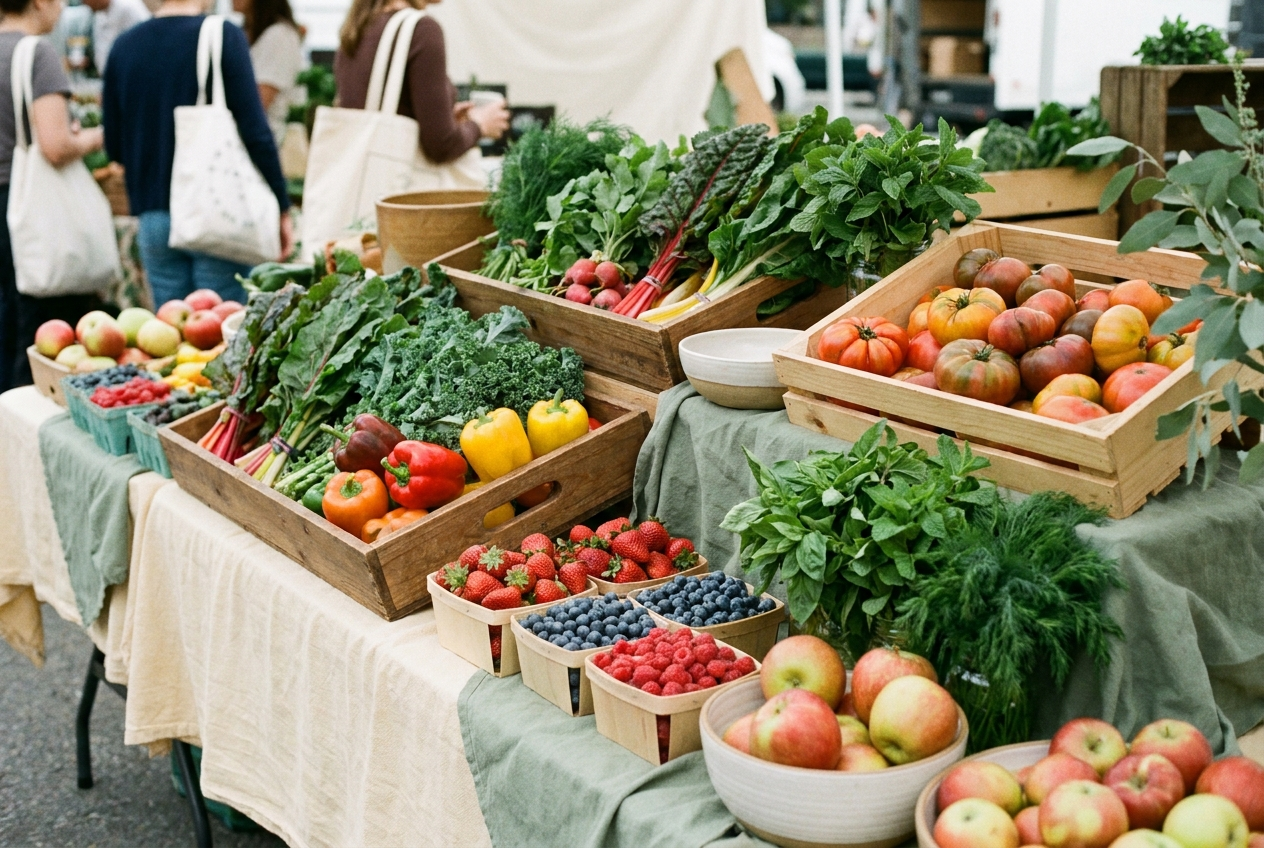
Does that mean you should buy everything labeled “eco”? No. It's much wiser to prioritize by peel:
- Where it really makes sense — thin-skinned products that we eat whole, with the skin. The independent organization EWG publishes a list each year of products with the highest levels of residues — commonly called the “dirty dozen.” These usually include: strawberries and berries, spinach and leafy greens, grapes, apples, peaches, pears, nectarines, bell peppers, cherries. Here organic or trusted farm produce is a good investment.
- Where you can relax — thick-skinned products that we peel. They're often called the “clean fifteen”: avocado, bananas, pineapple, onion, asparagus, mango, kiwi, cabbage, melon, citrus. The peel is a natural protection, and the difference here is minimal.
(Important: these lists are a guide, not law. They are made by a public organization and concern surface residues. But as a practical compass for “where to direct your budget” — they work great.)
And one more secret that's often more important than the “organic” label: seasonality and locality. A local tomato in season that traveled to you for a day is almost always fresher, tastier, and more nutritious than a “perfect” out-of-season import picked green three weeks ago. So my main advice sounds almost banal: look for a market, a farmer, and the season — and quality will come by itself, without paying extra for a sticker.
How to choose fresh at the store
Quality starts before the checkout — in what you put in the basket. A few simple cues that almost always work:
- Color and firmness. Fresh vegetables and greens are firm and bright, not limp and dull. Lettuce leaves should look like they’ll “crunch.” A gentle press on a tomato or avocado will tell you ripeness: firmness with a slight give, without dents that remain.
- Stem and "tail." For greens look at the cut: fresh is light and moist, old is dark and dried. For berries and apples the stem should be green and sturdy, not dry and brown.
- Smell. A ripe seasonal product smells like itself: tomato smells like tomato, melon like melon. Lack of smell often means the product was picked underripe and “ripened” on the way.
- Skin. Soft dark spots, wrinkling, and mold are signs the product has been sitting a long time. A light natural bloom on plums and grapes, however, is a sign of freshness and can be washed off easily.
- Weight. Between two fruits of the same size, the heavier one is usually juicier (especially citrus and cucumbers).
- Season and origin. Check the price tag: local and seasonal often traveled less and were picked ripe — a free hint about freshness.
And a small basket rule: buy exactly as much as you can eat fresh. It's better to shop twice a week for small amounts than to buy once and stock up, only to throw out limp food later. The freshness you bring to the plate — that's what quality is.
How to properly wash vegetables, fruits, and greens
This is the part where a small habit has a big effect — and where many do the opposite.
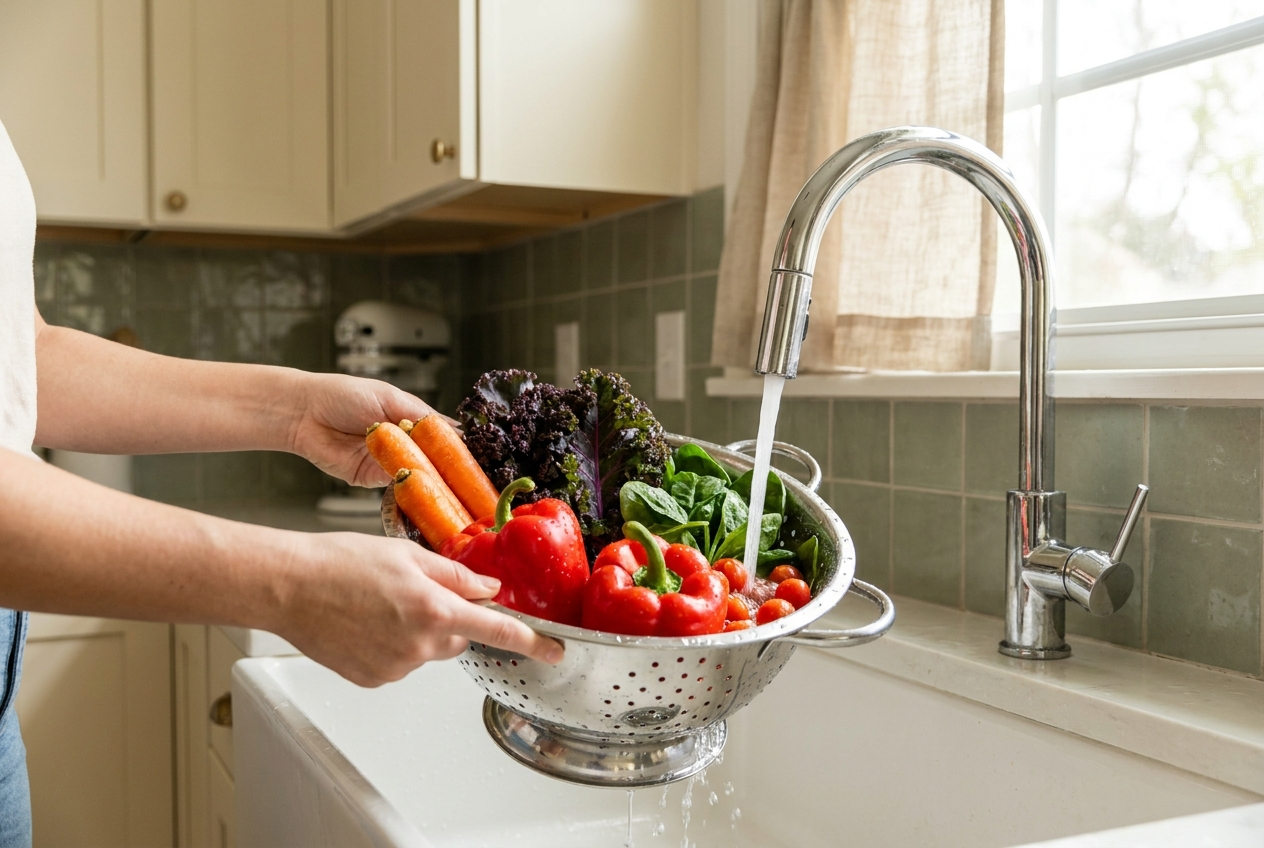
First general rules, then by product type.
- Base — running water and your hands. Simply holding under the tap is not enough: gently rub the surface with your hands or a soft brush. Mechanical friction removes more than water alone.
- Soak when you want to remove more. The most effective method for surface residues is a baking soda solution: about a teaspoon per cup of water, soak for 12–15 minutes, then rinse thoroughly. A 2017 study (University of Massachusetts) found that a baking soda solution removed more pesticide residues from apple surfaces than plain water or a chlorine solution. Important: this is about the surface, not what has been absorbed inside — so for the “dirty dozen” it's better to combine washing with choosing farm-sourced produce.
- No soap or dish detergents — they are not meant for food and leave residues themselves. Special “produce washes” don't outperform water and baking soda; vinegar also doesn't show a special advantage.
- Wash even what you peel. When you cut an unwashed melon, cucumber, or avocado, the knife transfers everything from the peel to the inside flesh. Wash first — then peel.
And now by type:
- Leafy greens and salads: separate into leaves, soak in a bowl of cold water, let the sand settle, lift the leaves (don't drain the water through them), repeat if necessary. Dry.
- Berries: wash quickly and only before eating — extra moisture speeds up mold. You can do a short baking soda soak, then dry immediately.
- Mushrooms: don't soak — they absorb water like a sponge. Wipe with a damp towel or rinse quickly and dry right away.
- Root vegetables (potatoes, carrots, beets): scrub with a brush under water, especially if you plan to eat the skin.
- Grapes, apples, peppers, tomatoes: rub with your hands under water; for the “dirty dozen” use a baking soda soak.
How to store to preserve benefits
You can buy an ideal product and lose half its benefits at home. Remember: vitamins are destroyed by light, air, heat, and time. So storage is also about quality.
First about ethylene. Some fruits (apples, bananas, tomatoes, avocados) produce ethylene gas, which speeds up ripening and spoilage of nearby items. Keep them separated from delicate greens and vegetables.
Next — a mini-guide “where to put what”:
- At room temperature, not in the fridge: tomatoes (cold kills taste and texture), bananas, unripe avocados and peaches, and — in a dark cool place — potatoes, onions and garlic.
- In the fridge: berries (dry, in a container with a paper towel, wash before eating), leafy greens (wrap in a cotton or paper towel — it absorbs excess moisture), most vegetables.
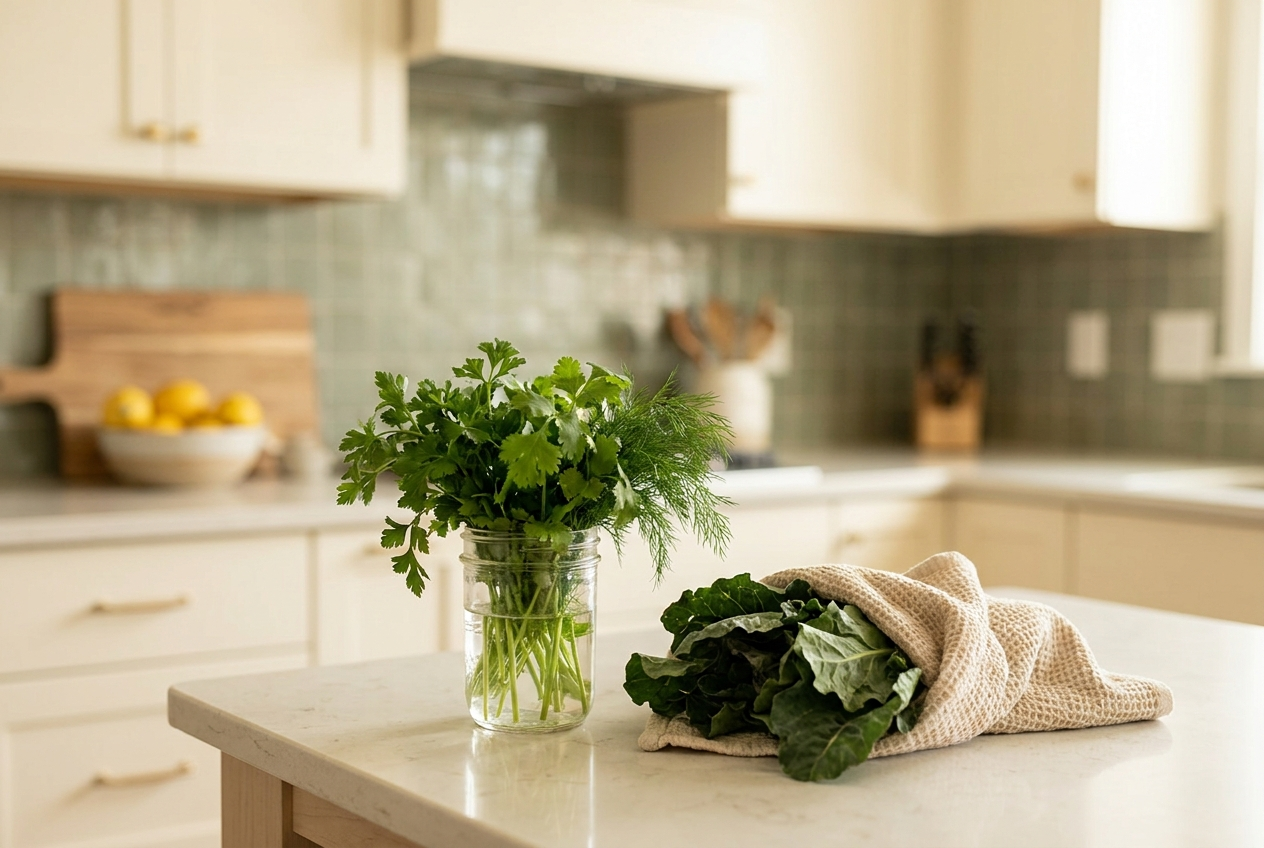
- Greens and herbs — like a bouquet. Put a bunch of parsley, cilantro, or basil in a glass of water (basil at room temperature, others can go in the fridge covered with a bag). They last 2–3 times longer this way.
- Cut before eating. Chopped fruits and vegetables lose vitamins faster and oxidize — keep them whole as long as you can.
- Cook gently. Short steaming and quick sautéing preserve more vitamins than long boiling in a large volume of water.
And separately — about freezing, because there are the most myths around it.
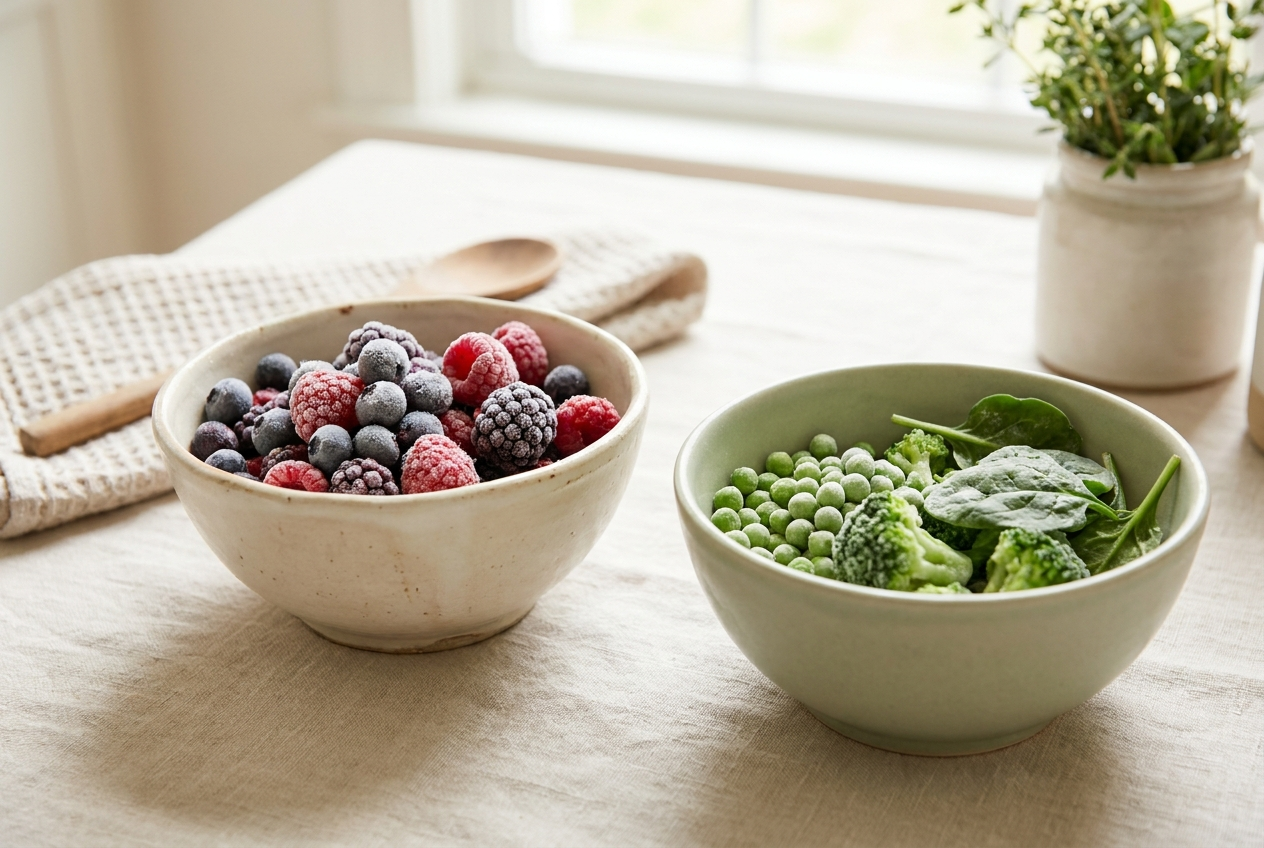
Frozen vegetables and berries are not a compromise, but a smart choice. They are frozen almost immediately after harvest, at peak ripeness, so nutritionally they often match or even surpass “fresh” produce that sat on a shelf for a week (vitamin C in fresh produce drops over time). In winter, out of season, or on a busy week the freezer with good veggies and berries is a way to keep quality high without extra stress and without throwing away spoiled items.
The Better Plate: quality as the next layer of the method
Putting it all together, the full formula of The Better Plate sounds like this:
What you put on the plate + in what order you eat it + what quality those foods are.
We already covered composition and order. Quality is the next, finer layer. It doesn't demand idealism — it demands attention. And it's often what turns “right nutrition” into nourishment that actually makes you feel better: more flavor, more benefit, less waste.
Frequently asked questions
Organic or local — which is more important? If you must choose one — more often local and seasonal wins. Freshness and variety often provide more benefit and taste than an “organic” sticker on an out-of-season import. Ideally — local and low-chemical (hello, farmer's market).
Frozen or fresh? Fresh and local in season — wonderful. But “fresh” from distant countries out of season often loses to frozen picked at peak. Keep a basic set in the freezer — it's convenient and high-quality.
Is ‘fresh’ always better? No. “Fresh-looking” and “fresh in essence” are different. A product that has been stored a long time loses vitamins even if it looks perfect.
Should I overpay for everything organic? No. Direct your budget to the “dirty dozen” (thin-skinned), and save on the “clean fifteen.”
Wash in advance or before eating? Greens and berries — before eating: extra moisture during storage speeds spoilage. The rest — whatever's convenient, but always before cutting.
Small steps for this week
You don't need to change everything at once. Choose one or two:
- Remember the rule “what + which”: quality is the second half of the plate.
- Wash even what you peel.
- For thin-skinned (berries, greens, apples, peppers) choose farm/organic; for thick-skinned — feel free to get regular.
- Once, go buy seasonal and local instead of an out-of-season import.
- Soak berries or greens in a baking soda solution for 12–15 minutes.
- Put greens in a glass of water, keep berries dry — and see how much longer they last.
- Separate ethylene-producing fruits (apples, bananas) from delicate greens.
- Keep a bag of good vegetables and berries in the freezer for busy days.
When not to worry
And the most important — please, no perfectionism. 💚 Better to eat lots of regular vegetables than a few “perfect” ones. You don't need 100% organic, you don't need to fear every apple, and you don't need to feel guilty if today your plate has frozen broccoli instead of farmer's. Quality is a direction, not an exam. Small, calm steps — and the body responds with gratitude.
Educational note: this material is for general information and does not replace individual consultation with a specialist. The Better Plate uses educational principles of healthy eating, including ideas inspired by the Harvard Healthy Eating Plate; Better With Anna is not affiliated with Harvard University.
Want quality to become part of your plate without stress? Visit the Better With Anna homepage or read why we updated the Harvard plate in The Better Plate method. And if you want to dive deeper into nutrition for the microbiome — here’s the full guide. 🌱
Sincerely yours, Anna Bertoldi