Nutraceuticals without fanaticism: when supplements can be useful, and when it's better to get tests first
Supplements can help, but a good system always starts with tests, nutrition, and sleep.
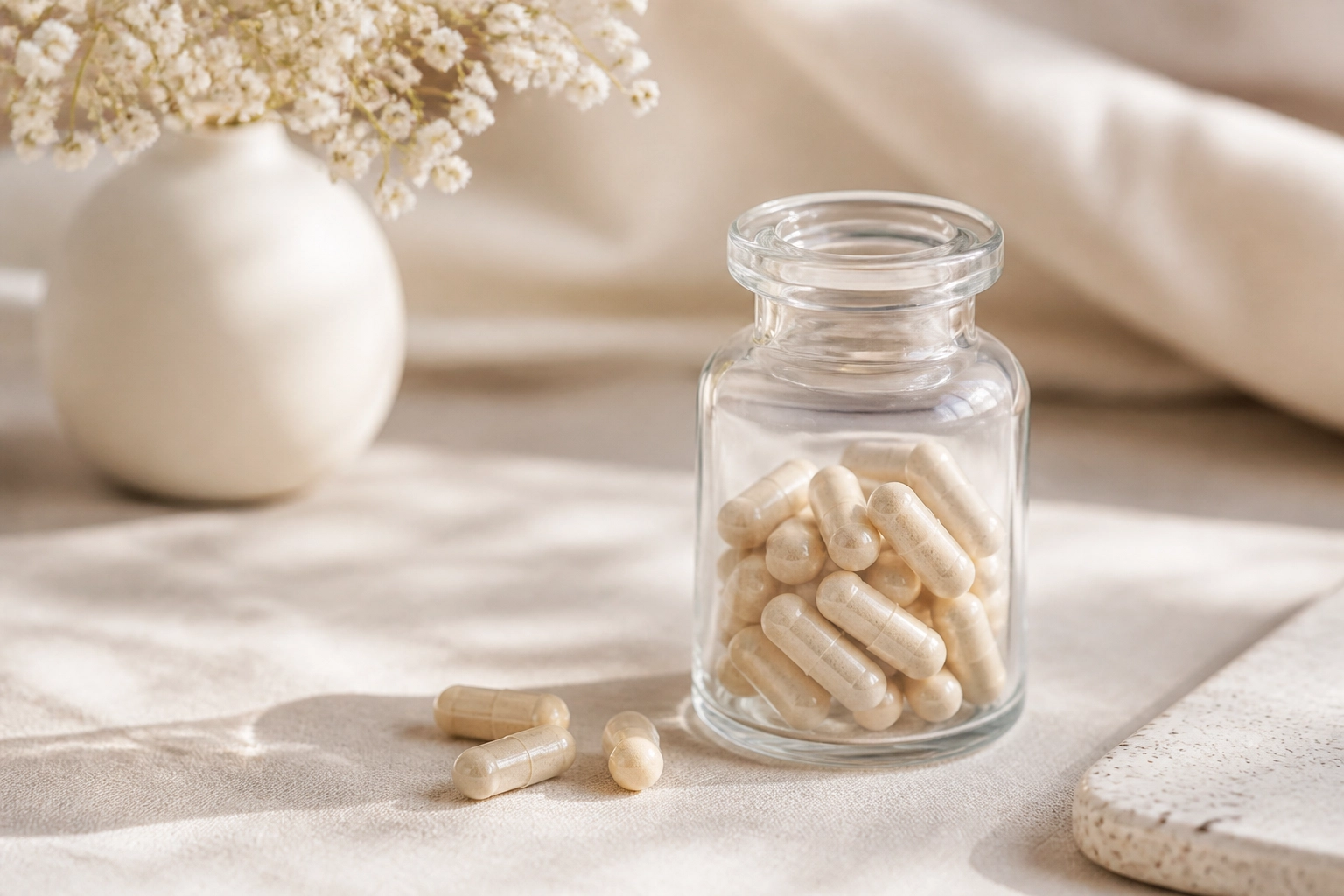
Excerpt: Supplements can help, but a good system always starts with tests, nutrition, and sleep.

There is too much noise around supplements today. Jars promise energy, glowing skin, deep sleep and almost a new version of you. Against this background it is easy to start buying everything at once: magnesium, collagen, vitamin D, adaptogens, fiber, protein — and hope that they will piece your health back together into a beautiful system.
But to be honest, supplements are not the foundation. The foundation is nutrition, sleep, movement, stress level and understanding what is happening in your body. No supplement will replace regular meals with enough protein and fiber. No capsule will compensate for chronic sleep deprivation. And no “perfect protocol” should begin without understanding your blood markers.
That is why before any supplements I always recommend first getting tests and discussing the results with a doctor or qualified specialist. This is not a formality but an essential part of a competent approach. Especially when it comes to vitamin D, iron, B12, magnesium, thyroid issues, pregnancy, chronic conditions or taking medications, including anticoagulants.
Important: this material is for informational purposes and is not medical advice. You should not prescribe supplements to yourself “just in case.” If you want to approach the topic consciously, start with a test and consultation.
Foundation first: food, sleep and basic markers
Before opening iHerb and choosing another jar, it is worth looking at the basics. Do you have enough protein in your diet? Is there enough fiber? How stable is your sleep routine? Does your body have the resources to recover, or do you live in a constant state of tension?
When the base is in place, supplements can indeed provide support. Not magic, not a “rescue”, but a calm and appropriate addition. They help close deficiencies, support skin, energy, digestion or recovery — but only when you understand why you need them.

What can be gentle support
Below are the supplements that most often make sense in practice, if approached calmly, without extremes and based on data.
1\. Magnesium glycinate
Magnesium is involved in hundreds of processes in the body. It is needed for muscle function, the nervous system, energy production and normal protein metabolism. The form matters.
Magnesium glycinate is considered one of the gentlest and best tolerated forms. It is often chosen when you want to support the nervous system, sleep, muscle relaxation and general recovery without extra burden on the GI tract. As a general guide, 100–300 mg of elemental magnesium per day is often considered, but actual needs depend on your diet, stress level and lab markers. It is important here to look specifically at the amount of elemental magnesium, not just the weight of the compound on the label. And another guideline: for magnesium from supplements an upper limit of 350 mg per day is often mentioned, unless prescribed by a doctor.
If you have kidney disease or take medications, you should not add magnesium on your own. A consultation with a doctor is especially important here. _Source: NIH._
2\. Vitamin D3 + K2
When people talk about supplements, they most often discuss vitamin D3 combined with K2. D3 is often used to support vitamin D levels, and K2 is discussed in the context of bone metabolism. But the vitamin D dosage should be based not on trends but on the 25(OH)D test.
It is important not to confuse K2 and K3: vitamin K3 / menadione is not used in dietary supplements for humans due to safety concerns.
If you take blood-thinning medications, you need to be particularly careful with vitamin K. In such a situation the regimen must be discussed with a doctor. _Source: NIH._
3\. Plant protein / Pea protein
Protein is not just a gym story. It is about muscles, recovery, skin health, satiety and more stable energy throughout the day. In practice, many people simply find it difficult to get enough protein from regular food, especially with a busy schedule.
Therefore a quality plant protein can be a very convenient tool. Pea protein is one of the most practical options. Research shows that it can be an effective solution for supporting muscles and recovery, especially if you need an easy way to add protein without complex cooking.
For physically active people, sports recommendations often cite a range of about 1.4–2.0 g of protein per kilogram of body weight per day. This is not a universal norm for everyone, but a guideline that helps assess actual need. _Source: ISSN._
If the day is long, meetings follow one after another, and a full meal is not always possible, protein may be not a “sport supplement” but simply a way to support the structure of your eating.
4\. Psyllium
Psyllium is a soluble fiber that can noticeably improve digestion, gently support stool regularity and help with satiety. It has also been studied in the context of supporting normal LDL cholesterol levels: in the meta-analysis by Jovanovski et al., psyllium intake was associated with a reduction in LDL in adults.
Pace is very important here. It is better to start slowly, for example with a small amount, and gradually increase the dose. And be sure to drink enough water. If fluids are scarce, the effect may be the opposite, and instead of comfort you may get heaviness or constipation.
One more practical point: psyllium can affect drug absorption, so it is better to leave at least two hours between it and medications. _Source: Jovanovski et al., meta-analysis._
5\. Tulsi tea / Holy basil
Sometimes the most useful support is not a capsule but a ritual. A warm cup of Tulsi in the evening can become a beautiful and very earthy way to tell your nervous system: the day is ending, you can slow down.
I like these things not for a “magical effect” but for their role in real life. When you regularly create a calm evening ritual, the body begins to read it as a signal to relax. This is a gentle evening ritual that can support the sense of recovery and overall inner calm.
During pregnancy and breastfeeding any herbs, including Tulsi, are better discussed with a doctor.
6\. Collagen
Collagen is often sold as a miracle cure for wrinkles, and that is certainly an overblown promise. But if you look at the data calmly, hydrolyzed collagen peptides in doses of about 2.5–10 g per day can indeed support skin hydration and elasticity.
At the same time collagen does not work in a vacuum. It needs context: enough protein in the diet, vitamin C, normal sleep, adequate recovery. So it is not “magic powder” but one part of a broader system of care for skin and tissues.
I like to see collagen this way: not as a promise of a perfect face, but as a calm, realistic support. _Source: systematic reviews._
What I would not do
I would not create a collection of twenty jars “just in case.” Such an approach creates more noise than benefit and makes it almost impossible to understand what actually suits you.
I would not use high doses without tests. Especially when it comes to fat-soluble vitamins or minerals that can accumulate and produce quite different effects than you expected.
And I definitely would not replace food with supplements. Neither green powders, nor collagen, nor protein can replace a proper meal with real foods, chewing, satiety and all the physiology on which health relies.
A calm and smart approach
A good supplement regimen starts not with iHerb but with a check-up. This is perhaps the most important thought in the whole topic of nutraceuticals.
I am drawn to a minimalist approach: less noise, less chaos, fewer impulsive purchases — and more clarity. When you understand your tests, see your body’s real needs and build the foundation — nutrition, sleep, movement, recovery — supplements become an appropriate support, not an endless experiment on yourself.
If you are interested in nutrition, skin, energy, sleep and a calm approach to yourself — save this material and stay with Anna. More useful content — on Instagram: \_anna.bertoldi\_.
Sources and scientific materials:
- _National Institutes of Health (NIH)._ Magnesium: Fact Sheet for Health Professionals.
- _National Institutes of Health (NIH)._ Vitamin D: Fact Sheet for Health Professionals.
- _International Society of Sports Nutrition (ISSN)._ Position Stand: Protein and Exercise.
- _Jovanovski et al._ Meta-analysis on psyllium supplementation and LDL cholesterol reduction.
- _Systematic reviews on oral collagen supplementation and skin hydration/elasticity._
- _National Center for Complementary and Integrative Health (NCCIH)._ Herbs and complementary approaches for stress support.