What to Feed the Good Bacteria: A Complete Nutrition Guide for the Microbiome
A short nutrition guide for the microbiome: fiber, probiotics and a kimchi recipe for your energy and glow.
Hello! Have you ever wondered why sometimes after eating your stomach feels “bloated”, by evening you have no energy at all, and your skin is doing its own thing? We are used to blaming stress, lack of sleep or genetics, but often the answer lies much deeper — in your gut.
Inside you lives a whole world that determines how you feel today and how you will look in 10 years. Your microbiome is not just a collection of bacteria, it is your personal “control center” for health. In this guide we will look at how to turn your daily eating into gentle care for your bacterial allies without strict diets and complicated restrictions. All links to platforms and additional materials you will find in the special section at the very bottom of the main page www.betterwithanna.health.
Contents
- Why the Microbiome Is the Foundation of Everything
- Fiber: the Base for Your Bacteria
- Resistant Starch: the Secret Ingredient
- Fermented Foods: Live Cultures on the Plate
- Polyphenols: the Colorful Defense of Plants
- Butyrate: a “Thank You” from Your Bacteria
- List of “Enemies” of the Microbiome
- How to Build a Day for 29 g of Fiber
- Recipe: Beet Kimchi
- FAQ and Mini Action Plan
- Total Reset: if You Want a System
Why the Microbiome Is So Important
You are never truly alone. Right now about 38 trillion bacteria live inside you. According to research (Sender et al., 2016), their number is roughly comparable to the total number of human cells in the body. These tiny creatures are your main partners. They participate in vitamin synthesis, train the immune system, influence metabolism and even “communicate” with your brain via the vagus nerve.
When beneficial bacterial species predominate in the gut, you feel light, your skin is clear, and your energy is stable throughout the day. But if the balance shifts toward pathogenic flora, problems begin: from bloating and sugar cravings to chronic fatigue. The good news is that you can change this balance simply by choosing the right foods.
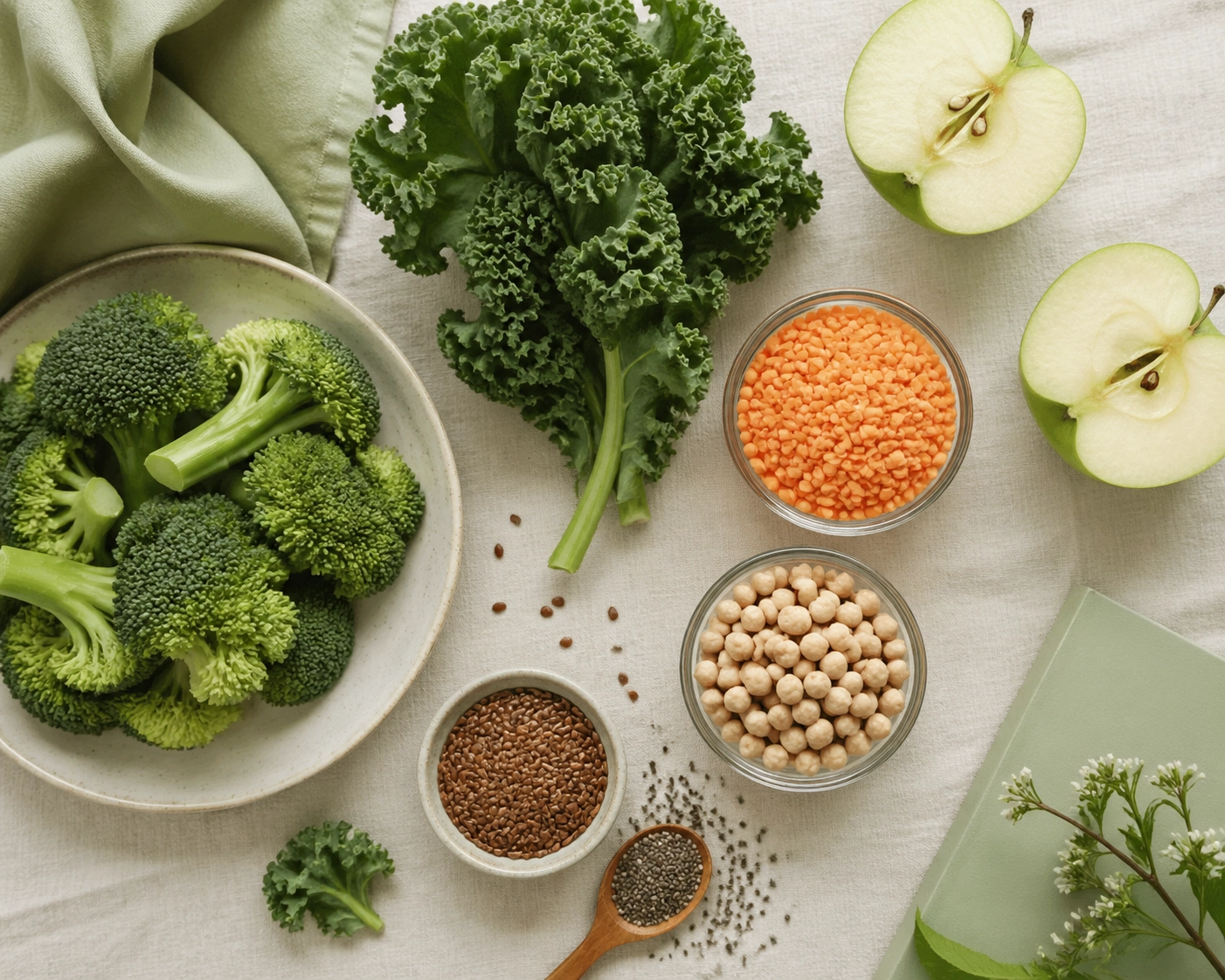
 _Scene: An aesthetic arrangement of vegetables, greens, legumes, chia and flax seeds on a light background. Top view._ _Alt text: A variety of fiber-rich foods for microbiome health_
1. Fiber — the Favorite Food of Beneficial Bacteria
Bacteria do not eat the same things as we do. They feed on what our body cannot digest on its own — complex carbohydrates that we call fiber. When fiber reaches the large intestine, bacteria begin to ferment it, releasing beneficial substances.
Current recommendations (Fu et al., 2022) suggest a norm of 25–30 g of fiber per day to maintain microbial diversity. Unfortunately, most people in the modern pace of life consume only about 12–15 g.
Where to find fiber:
- Vegetables and any greens: broccoli, spinach, arugula, asparagus.
- Legumes: chickpeas, lentils, beans (true superfoods for the gut).
- Whole grains: buckwheat, long-cook oats, quinoa.
- Seeds: flax, chia, pumpkin seeds.
- Berries and fruits: apples, pears, raspberries, blueberries.
_A gentle tip: if your diet currently contains few vegetables, don’t try to eat 30 g of fiber tomorrow. Start gradually by adding one serving a day, and be sure to drink enough water. Your GI tract needs time to adapt._
2. Resistant Starch — the Secret Food for the Microbiome
This is a real health life hack. Resistant starch behaves like fiber: it “resists” digestion in the small intestine and becomes a luxurious feast for bacteria in the large intestine.
The secret is that ordinary potatoes or rice change their crystalline structure when cooled, turning into this very beneficial starch (Simpson & Campbell, 2015). Hot mashed potatoes are just quick carbs, whereas baked and cooled potatoes in a salad are already food for the microbiome.
Top sources:
- Cooled boiled potatoes.
- Cooled rice (ideal for bowls).
- Slightly green (unripe) bananas.
- Legumes and lentils.
 _Scene: Cooled potatoes in a ceramic bowl and green bananas on a minimalist kitchen background._ _Alt text: Foods containing resistant starch to nourish gut bacteria_
3. Fermented Foods — Live Cultures on the Plate
Fermentation is an ancient method not only to preserve foods but also to enrich them with live probiotics. A Stanford University study (Sonnenburg et al., 2021) showed that a diet rich in fermented foods significantly increases microbial diversity and reduces markers of inflammation.
What to add to your plate:
- Sauerkraut: make sure it’s without sugar and vinegar. Traditional salting is the best choice.
- Kimchi: a spicy Korean side dish with powerful probiotic potential.
- Natural yogurt or kefir: look for a label indicating live cultures.
- Kombucha: a great alternative to sweet sodas.
- Coconut yogurt: if you prefer plant-based alternatives.
4. Polyphenols — the Colorful Defense of Plants
Polyphenols are natural compounds that give vegetables and berries their bright, rich colors. Interestingly, about 90–95% of polyphenols are not absorbed in the small intestine. They descend further, where bacteria convert them into active metabolites that protect our cells from aging and inflammation (Antioxidants, 2022).
Where they are most abundant:
- Dark berries (blueberries, blackberries, blackcurrants).
- High-quality dark chocolate (85% cocoa and above).
- Green tea and matcha.
- Spices: turmeric, cloves, cinnamon.
 _Scene: Dark berries, matcha powder, cinnamon sticks and pieces of dark chocolate on an elegant dark background._ _Alt text: Polyphenol-rich foods for antioxidant protection and gut health_
5. Butyrate — a “Thank You” from the Bacteria
Butyrate (butyric acid) is a short-chain fatty acid that your bacteria produce when they break down fiber. This substance is the main energy source for the cells of the gut itself.
Butyrate helps maintain the integrity of the gut barrier (so toxins do not enter the bloodstream), participates in appetite regulation and helps reduce systemic inflammation (McNabney & Henagan, 2017). Important point: although ghee or hard cheeses contain a small amount of butyrate, the best strategy is to feed your own bacteria with fiber so that they produce it right inside you.
What Beneficial Bacteria Don’t Like
To grow a “good garden” inside you, it’s important not only to feed the beneficial flowers, but also to prevent weeds from growing. Here’s what suppresses your microbiome:
- Excess sugar and ultra-processed food: this is the favorite food of pathogenic fungi and bacteria.
- Frequent courses of antibiotics: they act like a “carpet bombing,” destroying both harmful and beneficial residents. After a course you always need a recovery strategy.
- Chronic stress: through the gut-brain axis, stress directly changes the composition of the microbiota.
- Lack of sleep: the microbiome has its circadian rhythms. If you sleep less than 7 hours, the bacteria also get “confused.”
How to Build a Day for 29 g of Fiber
Many people think that eating 30 g of fiber is an impossible task. Let’s see how it looks in practice (numbers are approximate and depend on portion sizes):
- Breakfast: Long-cook oats + 1 banana + a handful of berries ≈ 8 g.
- Lunch: A portion of buckwheat + stewed vegetables (zucchini, pepper) + 3 tablespoons of chickpeas ≈ 10 g.
- Dinner: Vegetable stew + 2 tablespoons of sauerkraut ≈ 7 g.
- Snack: One apple with skin + a handful of nuts ≈ 4 g.
Total: approximately 29 g. As you can see, this is a full, tasty and satisfying day without feeling hungry.
Recipe: Beet Kimchi
This is my favorite version of a homemade probiotic. Beet adds sweetness and an amazing color, and fermentation makes the vegetables maximally beneficial.
Ingredients:
- 1 head of Napa cabbage.
- 1 medium beet.
- 1 onion.
- 2 garlic cloves.
- A piece of ginger root (about 5 cm).
- Salt, red pepper, turmeric.
Preparation:
- Cut the cabbage, beet and onion into thin matchsticks.
- Chop the garlic and ginger.
- Mix everything in a large bowl, add spices and salt.
- Thoroughly massage the vegetables with your hands until they release juice.
- Tightly tamp the mixture into a clean glass jar so that the juice completely covers the vegetables.
- Leave at room temperature in a dark place for 3 days. Check and press the vegetables every day.
- When the taste becomes pleasantly sour, move to the refrigerator. Done!
 _Scene: A glass jar with bright pink beet kimchi on a dark background. Looks appetizing and aesthetic._ _Alt text: Homemade beet kimchi — a natural probiotic for health_
Mini Plan: What to Add Today
You don’t need to change everything at once. Choose one action for this week:
- Add a serving of greens to every lunch.
- Buy flax or chia seeds and add a spoonful to your porridge or yogurt.
- Replace one sweet snack with an apple and a handful of almonds.
- Try adding a spoonful of sauerkraut to dinner.
FAQ: Answers to Common Questions
1. What if fiber causes bloating? This is a common reaction if the microbiome is not used to that volume of “work.” Start with cooked vegetables (baked, stewed) — they are easier to digest. Introduce legumes gradually, starting with 1 teaspoon, and be sure to drink more plain water.
2. How do fermented foods differ from pickled ones? Pickled products (where vinegar is included in the ingredients) undergo sterilization. They do not contain live bacteria. Fermented products are prepared by natural fermentation, where bacteria multiply on their own. We need those bacteria.
3. Will this kind of diet help reduce sugar cravings? Yes! Often sugar cravings are a “signal” from certain types of bacteria and fungi (for example, Candida) that feed on it. When you increase the share of fiber and fermented foods, the balance changes, and the desire to eat a chocolate bar becomes much less pronounced.
If You Want a System, Not Chaos: Total Reset
I know how hard it can be to implement new habits alone when there is so much conflicting information around. If you feel ready not just to read articles but want to build a clear, gentle and scientifically grounded nutrition system — I invite you to the Total Reset program.
Total Reset is a structured path from Better With Anna that will help you:
- Achieve lightness in the body and forget about post-meal bloating.
- Build a diet so that energy is stable until the very evening.
- Stop being dependent on sugar and on-the-go snacks.
- Understand the principles of the “better plate” and learn to assemble it in 10 minutes.
- Gently implement habits that work for your longevity.
This is not a diet. It is an elegant way to befriend your body and give your microbiome everything it needs to thrive.
 _Scene: A balanced Better Plate-style plate — quinoa, avocado, greens, bright vegetables and seeds on a calm background._ _Alt text: Balanced nutrition from the Total Reset program by Better With Anna_
Conclusion
Your gut health is not a destination but a daily journey. Your microbiome is incredibly responsive. It only takes a few days of feeding it properly, and it will respond with clear skin, a clear mind and a great mood.
Remember that you don’t need to be perfect. You need to be consistent. Start with a small step today, and your body will say “thank you.”
 _Healthy habits are beautiful and simple._
Save this article and write “MICROBIOME” in the comments under my latest Instagram post [\_anna.bertoldi\_] — I will send you my collection “9 Recipes for a Healthy GI Tract” completely free!
Sources and Research
- _Sender R, Fuchs S, Milo R. Revised Estimates for the Number of Human and Bacteria Cells in the Body. PLoS Biol. 2016._
- _Fu J, et al. Dietary Fiber Intake and Gut Microbiota Diversity. Nutrients. 2022._
- _Sonnenburg JL, et al. Gut-microbiota-targeted diets modulate human immune status. Cell. 2021._
- _Simpson HL, Campbell BJ. Review article: dietary fibre-microbiota interactions. Aliment Pharmacol Ther. 2015._
- _Antioxidants (Basel). Polyphenols and Gut Microbiota: A Mutual Relationship. 2022._
- _McNabney SM, Henagan TM. Short Chain Fatty Acids in the Colon and Peripheral Tissues. Nutrients. 2017._
Disclaimer: _This material is educational in nature and does not replace consultation with a physician. For gastrointestinal diseases, pregnancy, medication use or chronic conditions, be sure to discuss any dietary changes with your treating specialist._
English Summary
This comprehensive guide explains how to nourish the gut microbiome to improve energy, skin health, and digestion. It highlights five key dietary strategies: increasing fiber (25–30g daily), incorporating resistant starch (cooled potatoes and rice), eating fermented foods (sauerkraut, kimchi), consuming polyphenols (berries, dark chocolate), and supporting butyrate production through plant-based foods. The article also provides a practical 29g fiber meal plan, a Beet Kimchi recipe, and introduces the "Total Reset" program for those seeking a structured approach to nutrition and metabolic health.
SEO & Metadata (For Internal Use)
- SEO Title: What to Feed the Good Bacteria: Nutrition Guide for the Microbiome | Better With Anna
- Meta Description: Learn how to improve gut health through nutrition. A complete guide to fiber, probiotics and butyrate from Anna Bertoldi. Kimchi recipe and a day plan inside.
- URL Slug: nutrition-for-gut-microbiome-guide